

Once upon a time, the vikings—led personally by none other than Leif Eriksson himself—sailed up the Charles River in Boston, Massachusetts and established a thriving Norse settlement that stretched from Cambridge to Weston and even beyond to such distant locales as Rhode Island where they constructed a stone tower before abandoning their glorious endeavor in the New World forever. Or so certain 19th century crackpots wanted us to believe. They actually had a lot to say on the matter, and I’ve written about New England’s fake viking history and its [in]glorious monuments before, which you can check out here: Norumbega, Boston’s Vinland or by clicking the neighboring “Leif Eriksson Was Here” image.
And while it remains anyone’s guess as to whether Norse explorers from Greenland did in fact set foot on New England soil, most of the artifacts that have been used to make the claim in the past have since been proven to not be Norse at all.1 But that doesn’t make them completely unworthy of admiration, at least from a certain vantage point, anyway. And one of the most bizarre is Dighton Rock.
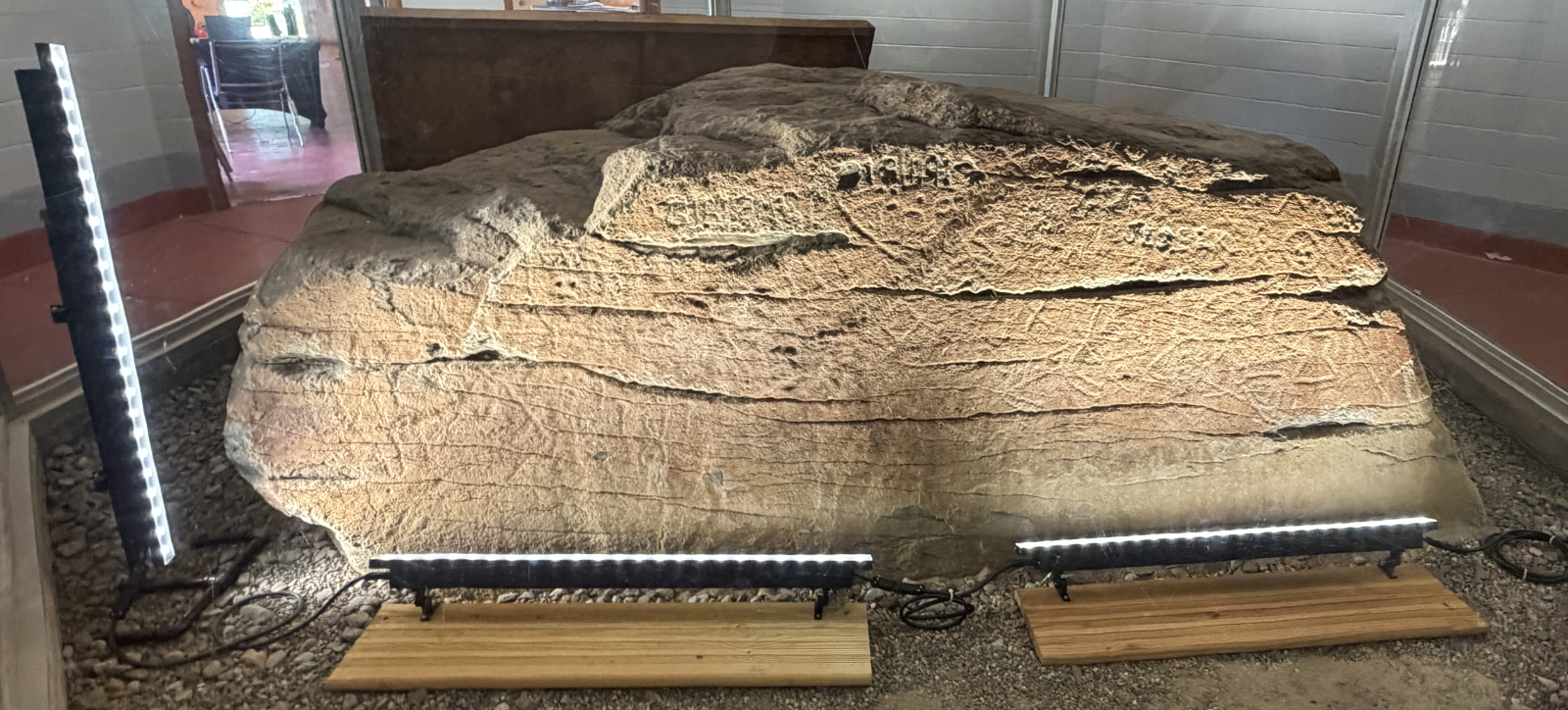
Sitting beneath the squat roof of an aesthetically pathetic 20th century structure in Berkley, Massachusetts, Dighton Rock is—in terms of being a runestone—complete and total bullshit. But that’s not its fault. It never claimed to be a runestone itself; it just got caught up in the hype that swept New England in the 19th century when everything viking-related was so fashionable that dubious and unverifiable claims on the subject took on a life of their own.2 That said, the rock’s surface is carved with strange markings, which are real. They’re just not Norse.
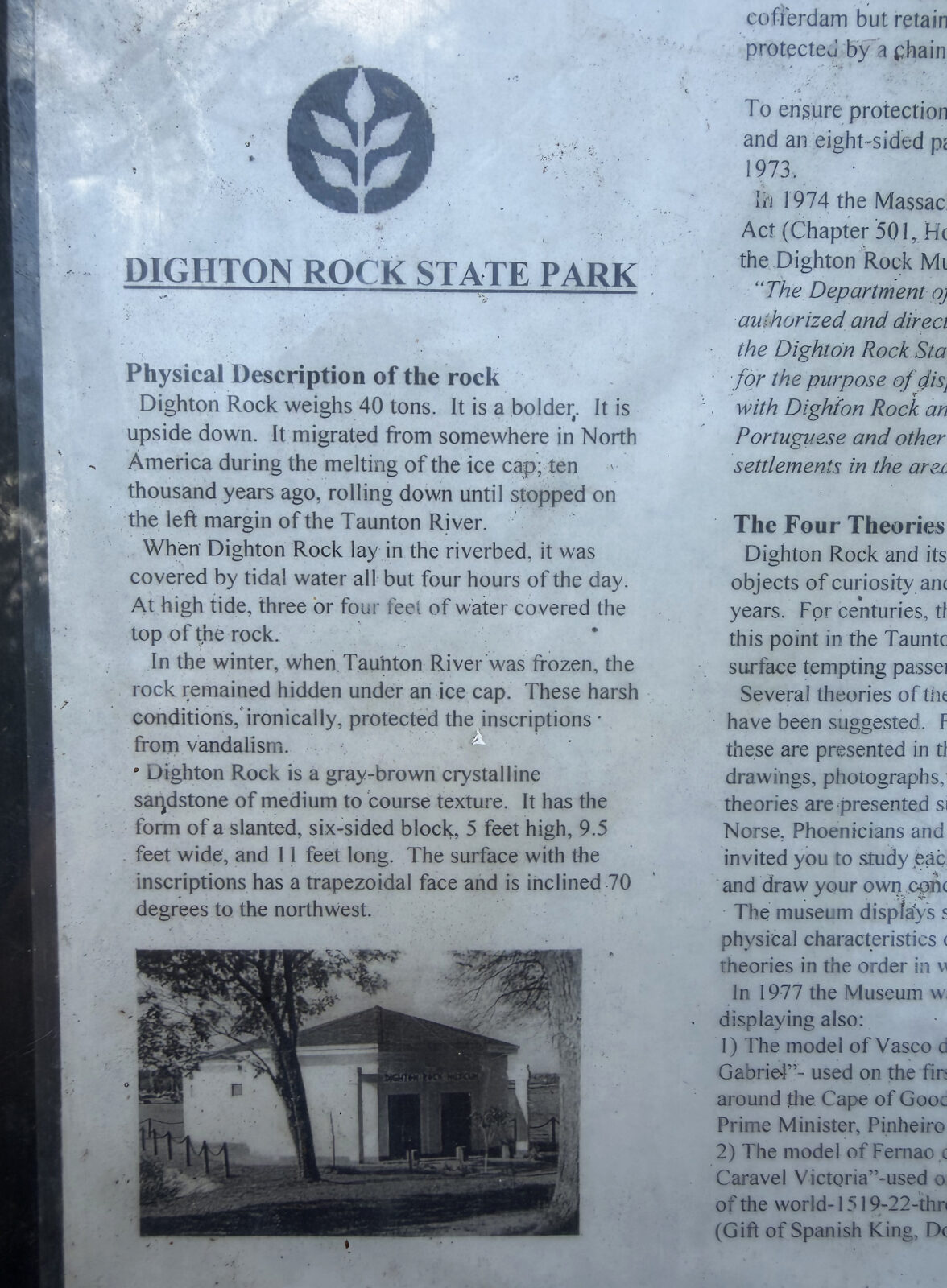
The claim that Dighton Rock’s carvings originated with Norse explorers is only one of the four theories that have been tossed out about them. The first to be suggested, and most likely, is that the carvings were made by Native Americans prior to European contact (in the Columbus sense, not Eriksson sense, but likely before him, too). The second theory is that the rock was carved by ancient Phoenicians who sailed far beyond the Mediterranean nearly 3,000 years ago, which I almost wish was true because it would just be so wild and entertaining to speculate seriously about that possibility. Third came the Norse theory, and, most recently, the Portuguese theory.
The Portuguese theory continues to hold sway, probably because it is the most recent and because many Portuguese people settled in the cities and towns of Massachusetts and Rhode Island that lie in the vicinity of Dighton Rock. The theory was also put forward by a notable Brown University psychology professor. As an amateur archaeologist who had married into a prominent local Portuguese family, he became something of a golden boy. But when holes started to be poked at his theory, the archaeological finds that he had uncovered (and used to base his ideas on) suddenly disappeared from Brown’s archives where he had donated them. What a coincidence! Anyway, you can browse the web to learn more about this train wreck of a plotline for an Indiana Jones film or Dan Brown novel if you wish. Fun as it is, the focus here is to discuss the Norse theory and share some pictures of the damn thing.
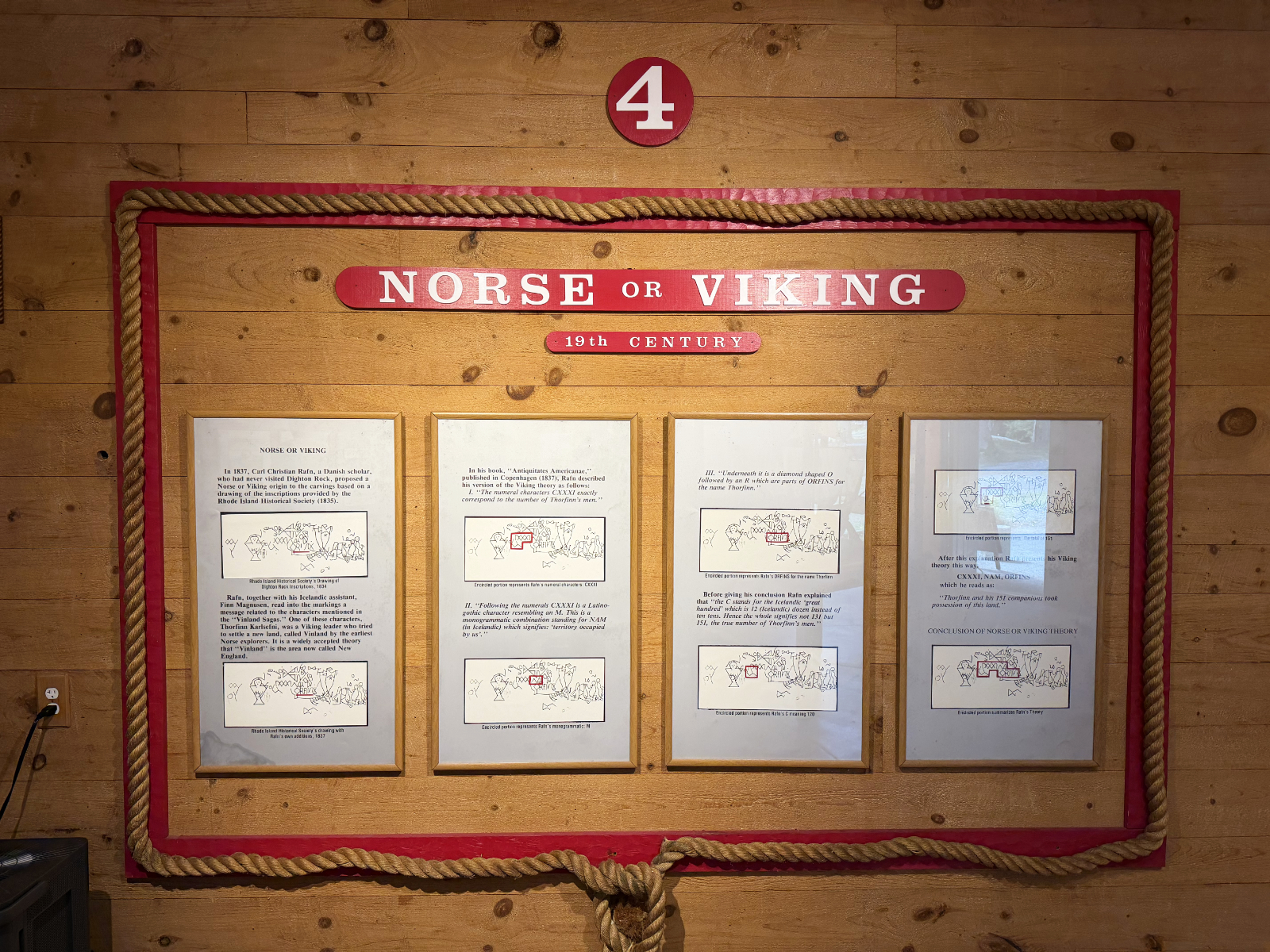
The Norse theory basically came about from a declaration made by Carl Christian Rafn, a Danish scholar who never saw the rock in person. His postulation that the carvings were Norse in origin was based on a drawing that he also personally manipulated to fit his idea. In the end, he claimed that Thorfinn Karlsefni and his crew had made the carvings. Thorfinn Karlsefni was an actual Icelander who explored Vinland, but probably not the Taunton River. He’s best known for being the husband of Gudrid Thorbjarnardóttir.3 No one believes Rafn’s theory anymore (it really doesn’t help when you manipulate the data) but the story remains amusing.
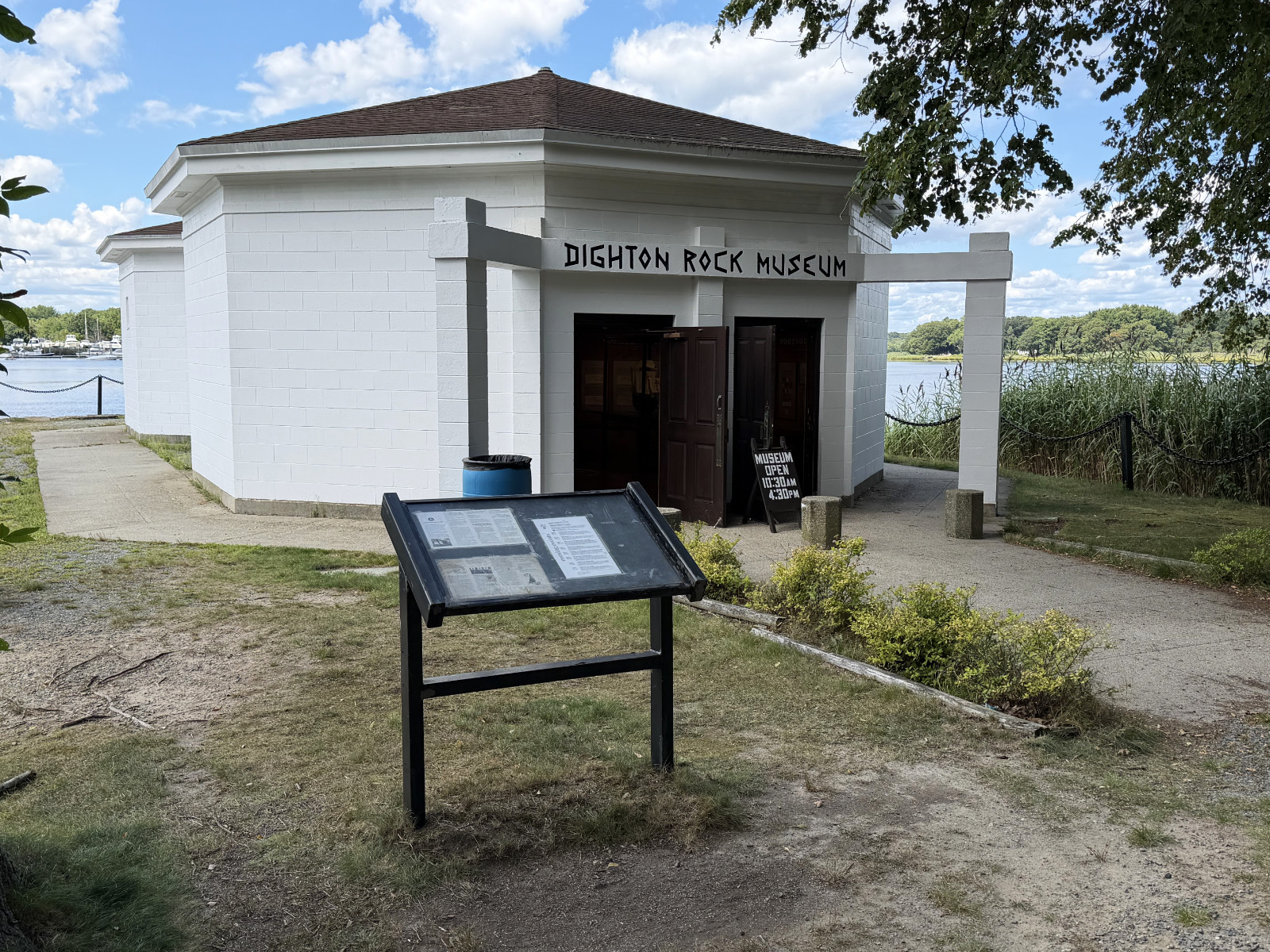
Today, the rock is the focal point of the aptly named Dighton Rock State Park. The rock and the little museum hut that shelters it lie adjacent to the Taunton River in Massachusetts, very near the Rhode Island border. It’s a nice plot of land that hosts hiking trails and picnic spots, that sort of thing.
Honestly, there really isn’t much to the museum itself. It has a few placards that describe the theories that have been postulated about the rock. There are also some very worn-out information signs outside the entrance to the museum. And the museum, of course, houses the rock itself, behind glass so that no one can mess with it. Which felt somewhat deflating when Matt Smith and I finally, after all these years, visited the rock in the summer of 2026. We didn’t want to mess with it, but we couldn’t touch its bizarre etchings with our own hands, either. Clearly, we weren’t experiencing one of Sweden’s 3,000 runestones where you can just walk right up to them and respectfully caress their sweet contours if you feel so inclined. But nonetheless: did Dighton Rock otherwise meet our expectations? Yes, resoundingly. But were our expectations high to begin with? Of course not.
However, it still makes for a fun and worthy outing for those who enjoy history’s bizarre quirks as well as pleasant river views. We even had a nice chat with the friendly state park staff guy who was working there that day. He told us about the Native American legend that a battle had taken place at the river in pre-Columbian times. And being a truly epic battle, memory of it lived on. Supposedly, the mighty chieftain of the local tribe was killed, and a mound was raised over his grave on the western side of the river. On the eastern side of the river, Dighton Rock and its carvings (that theoretically tell of the battle) pointed directly at the burial mound. All of which sounds reasonably plausible and at least more likely than an ancient Phoenician or medieval Norse or semi-modern Portuguese origin for the carvings.
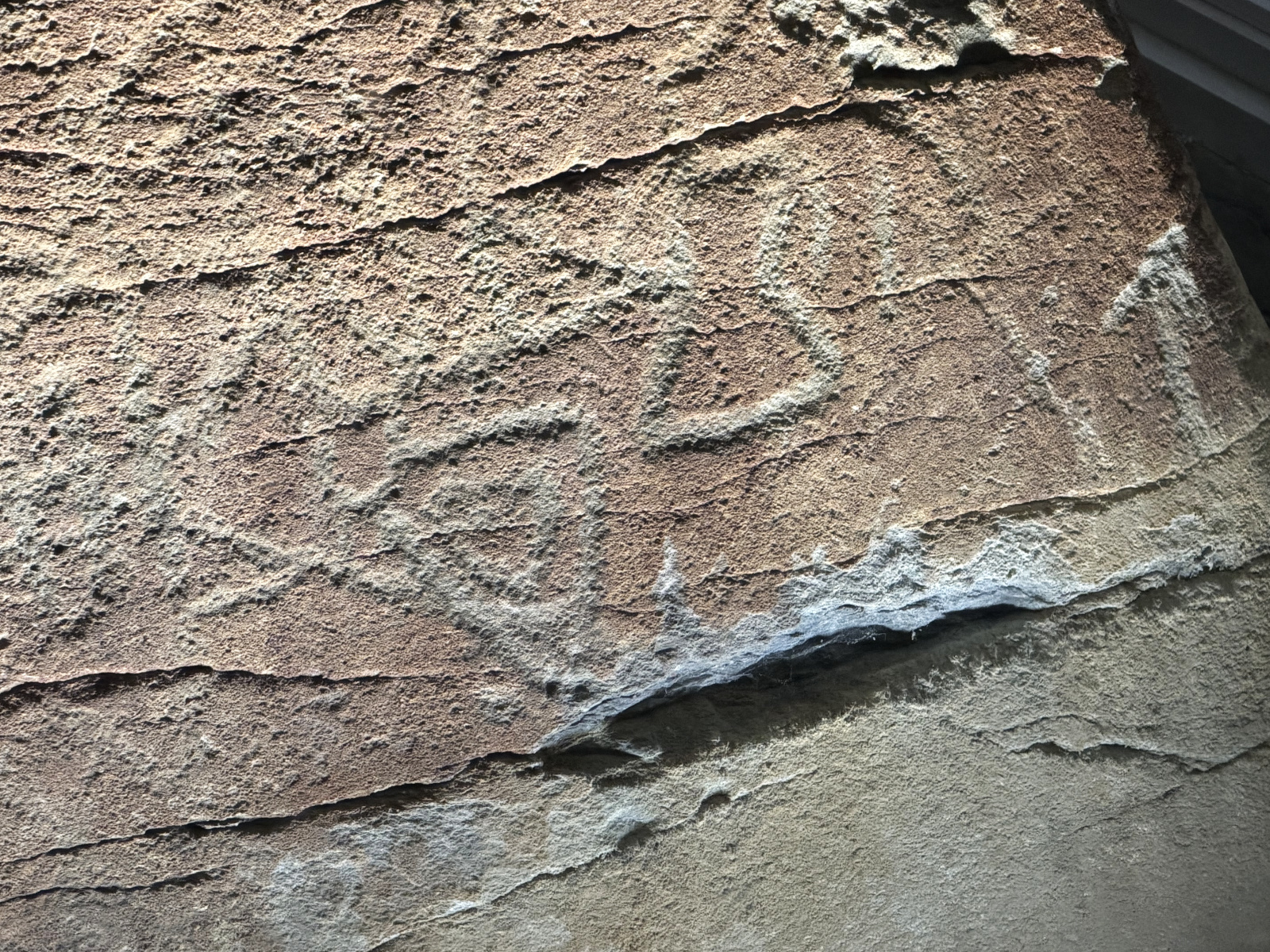
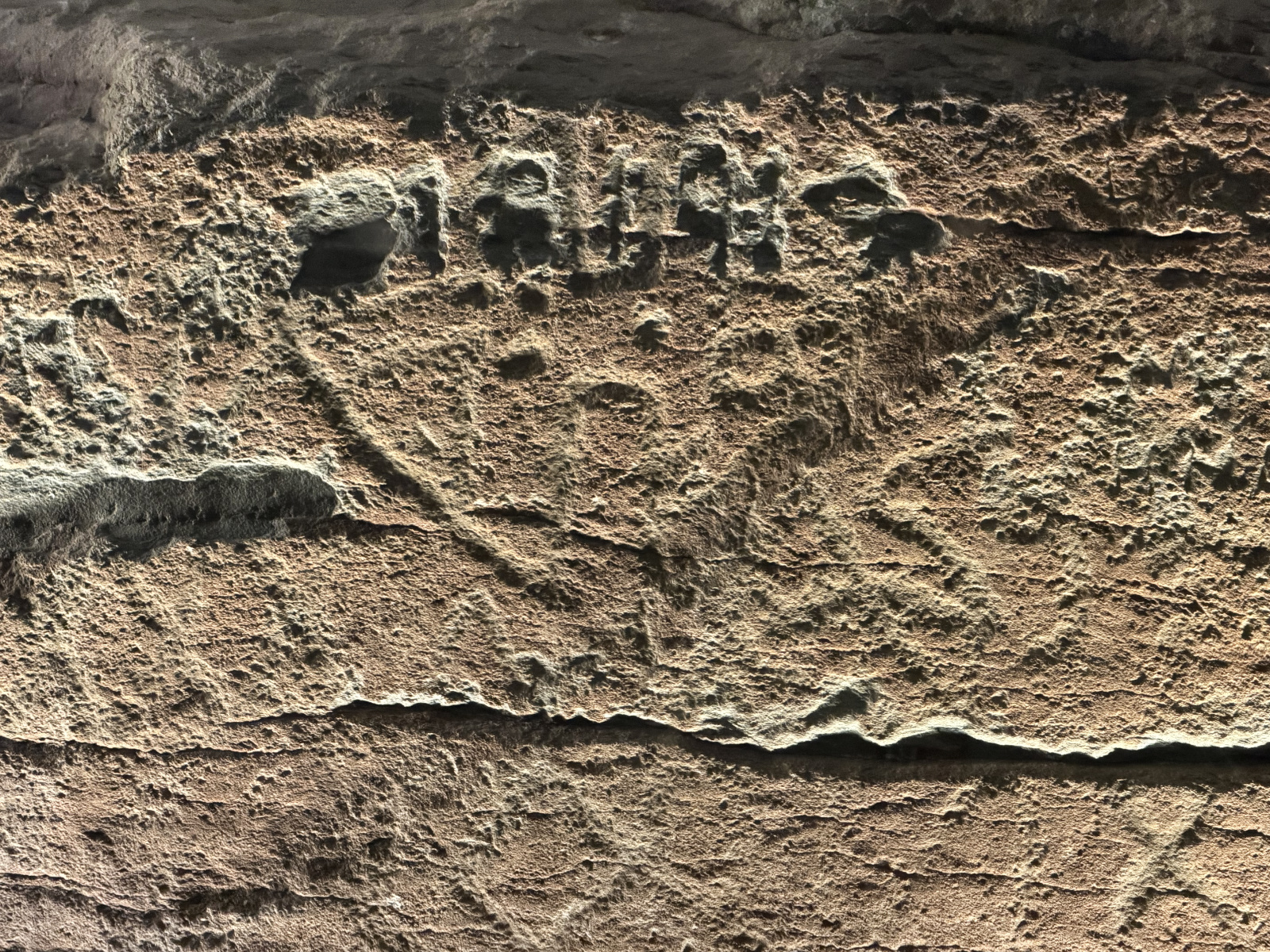
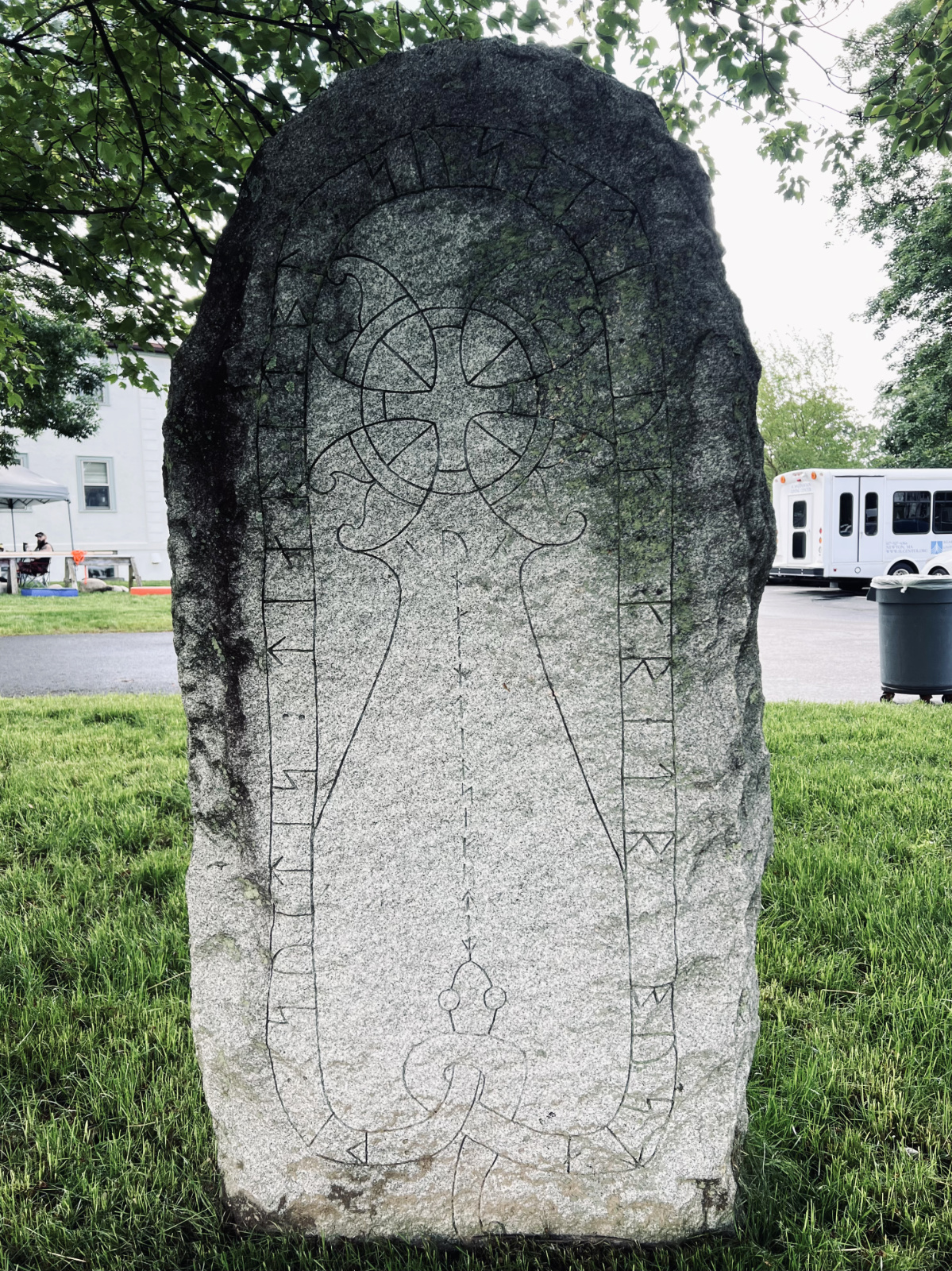
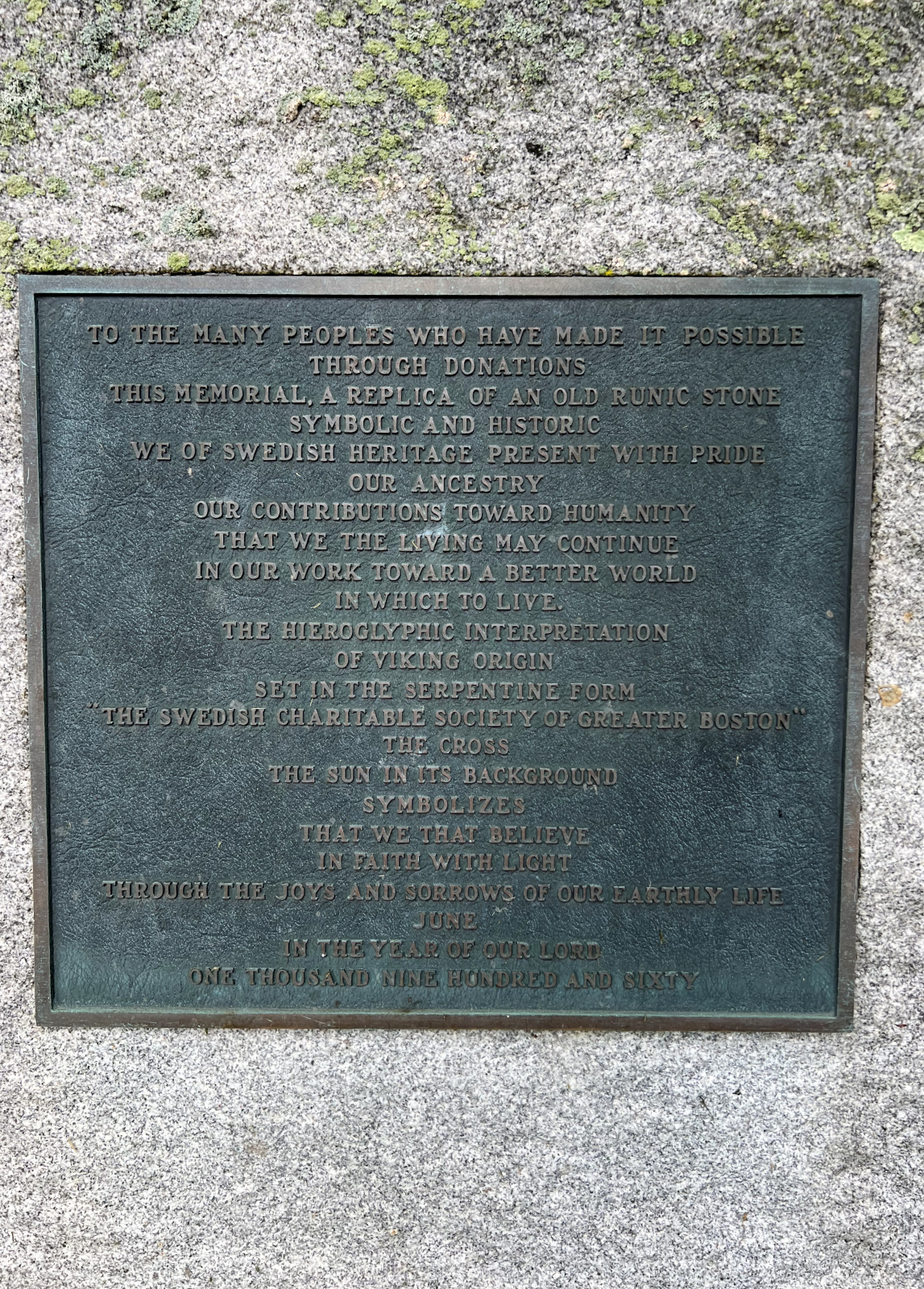
So, alas, Massachusetts remains devoid of any authentic runestones. And while that status won’t change short of Sweden sending one to the Commonwealth as some sort of badass cultural exchange gift, one can still look at a respectable replica runestone at the Scandinavian Cultural Center in Newton. It’s from 1960 rather than 960. A gift from the Swedish Charitable Society of Greater Boston, it was made to look like an authentic runestone, so there’s that.
- The exception is the Maine Penny, which is thought to have made its way to Maine slowly via trade routes. There are also other curious objects and landmarks that haven’t been properly studied and additional theories such as the one that posits that Norse explorers made camp on Cape Cod. ↩︎
- Sounds a lot like today, actually. Human nature has always been faulty, but at least human errors in the past never needed to compete with AI errors unlike in our present godforsaken decade. ↩︎
- Eponymous heroine of the “Original Icelandic Goth Girl” chapter in Children of Tax and Tea. ↩︎
Subscribe to get updates from Scandinavian Aggression!
You know, if you feel like it or whatever. You'll receive a code for 25% off any combination of items at the Puffin Carcass Etsy Store, including signed copies of The Impudent Edda and The Scandinavian Aggressors. Other discounts are included in the newsletter that is sent out to subscribers, which only happens when new nonsense has been posted to the site. Your email is only used for the purpose of sending those updates. It's stored in the secure abyss of WordPress and not shared anywhere or anyhow else. Skål som fan!