
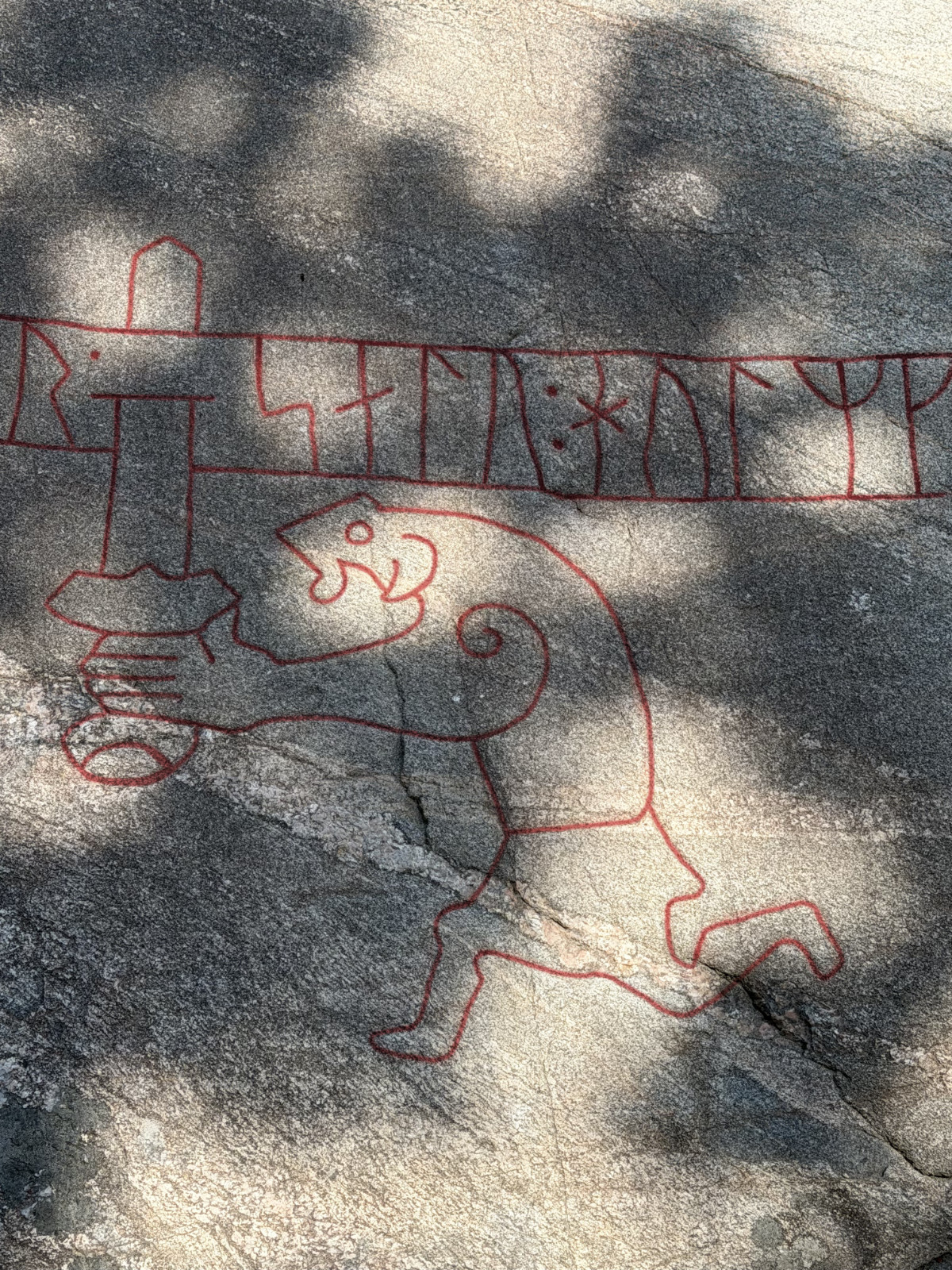
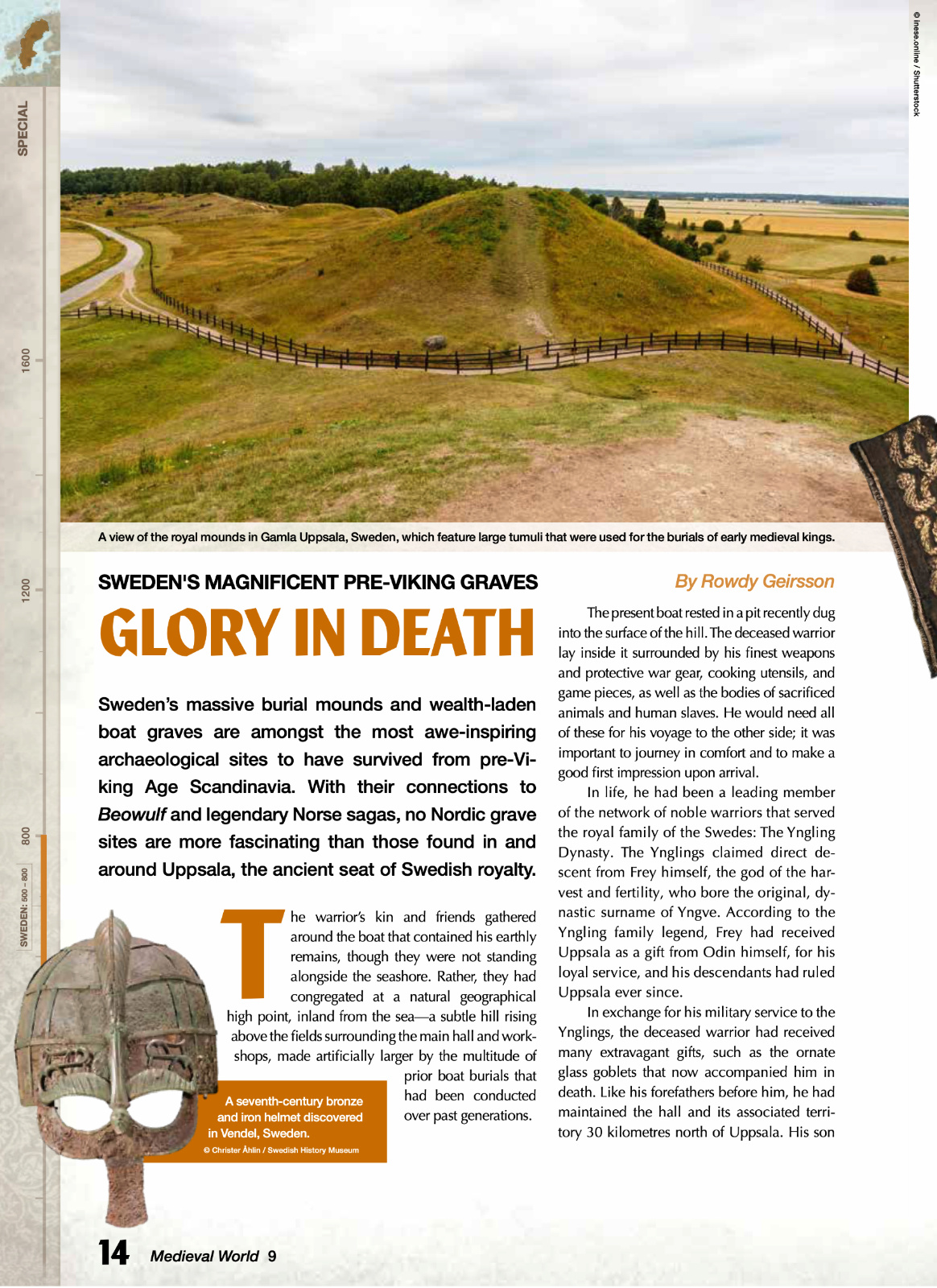
A thousand years ago the hero, Sigurd, began the multi-century process of slaying the vile dragon, Fafnir, atop a massive boulder in Svealand, the territory of the tribe that eventually came to rule all of Sweden. Thanks to the immortality of his story and the fact that this particular rendition was carved in stone, he still continues to slay the dragon today. In fact, he’ll never stop slaying the dragon in Sundbyholm. He is the once and future dragon-slayer, destroying the foul serpent and snacking on its heart till the end of days.1
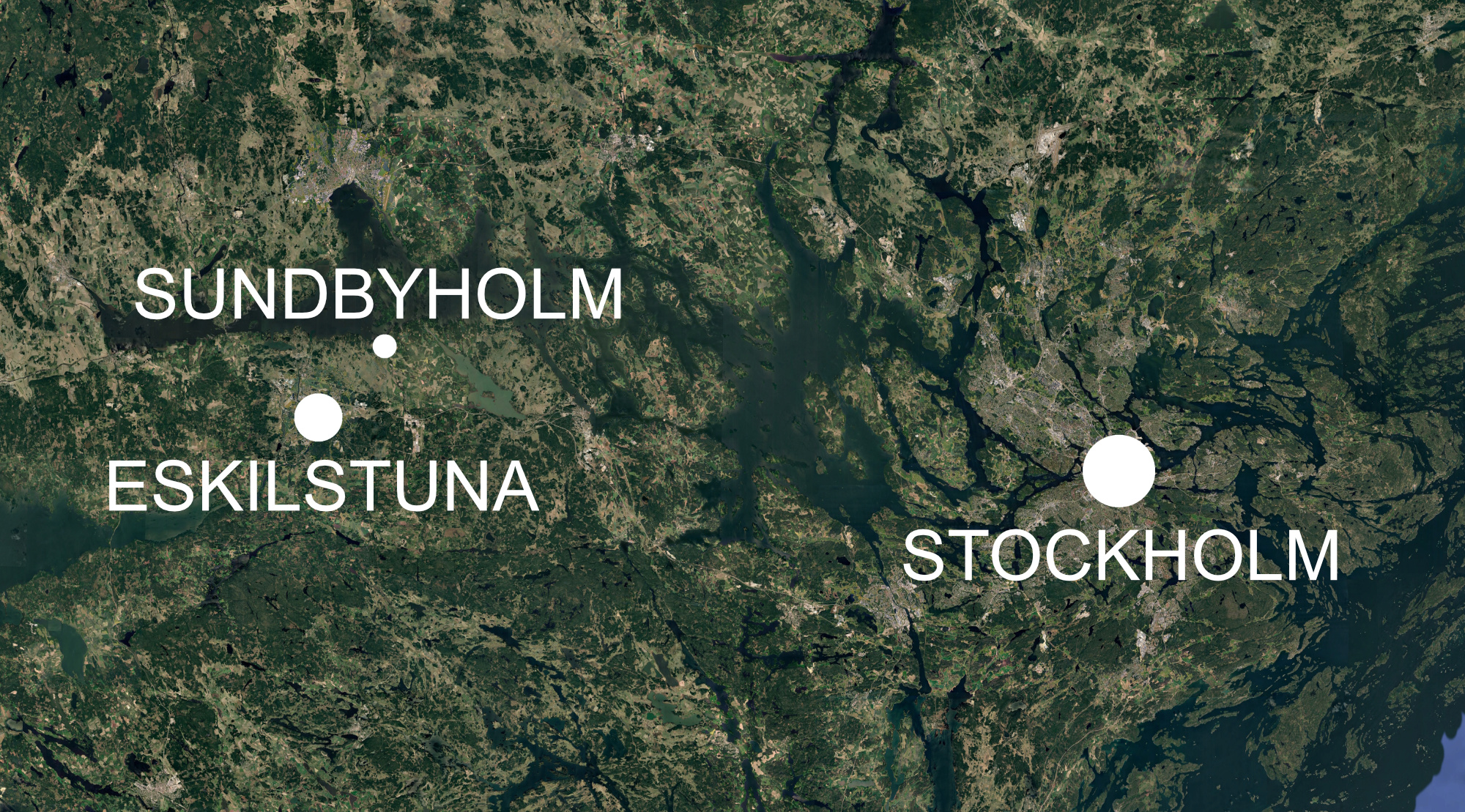
Of course, there are numerous other ancient and medieval depictions of Sigurd slaying the dragon in the Germanic countries. We’re not going to touch on them here, though. While the slaying itself may have played out somewhere along the Rhine, its awesomeness traveled far and wide, which is why we have the famous Sigurdsristningen (The Sigurd Carving) to admire in Sundbyholm, a village within the municipal boundary of the Swedish city of Eskilstuna about forty miles west of Stockholm.
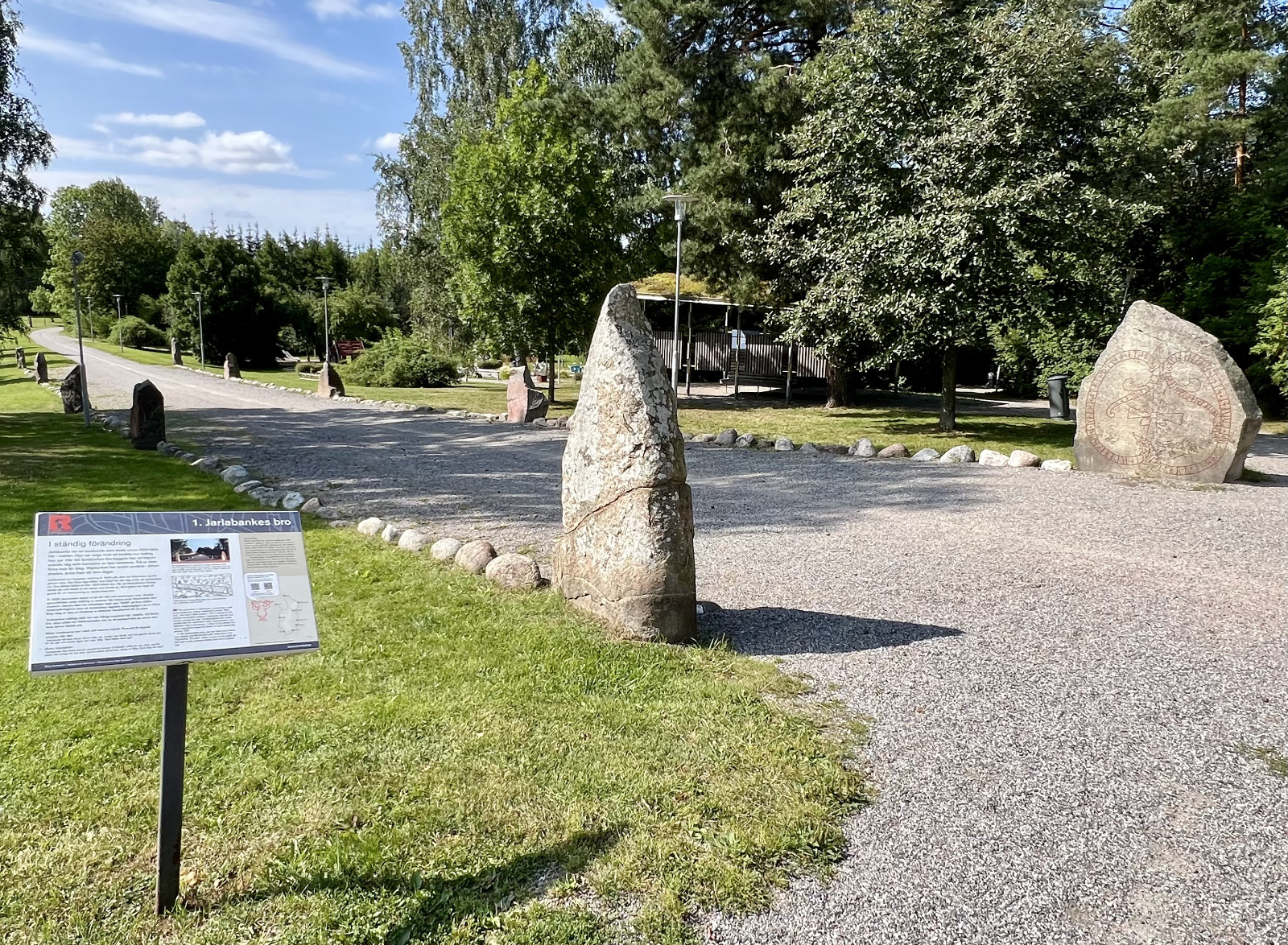
As with so many relics of Sweden’s pre-Christian past, it lurks like an antisocial loner among a patch of woods in farm country. It sits right beside a quiet country road, so it’s easy to get to depending on the transportation options available to you—you don’t have to traipse through unkempt undergrowth or across an irritable farmer’s crops to reach this beauty. And that brings us to the point of this post. Because this road used to be a body of water.
Images of the boulder and its carving (as well as information about its runic meaning) are readily available from actual authorities on the matter—museum websites, books by professors, whatever. Sörmlands museum (the county museum pertaining to the region in question) has a very good webpage about it. Aptly enough titled Sigurdsristningen, the webpage provides a nice overview of the stone and its background history. It also walks the reader through the story that the carving reveals (only in Swedish, but the museum webpage offers an automated translation option for all you barbarians out there).
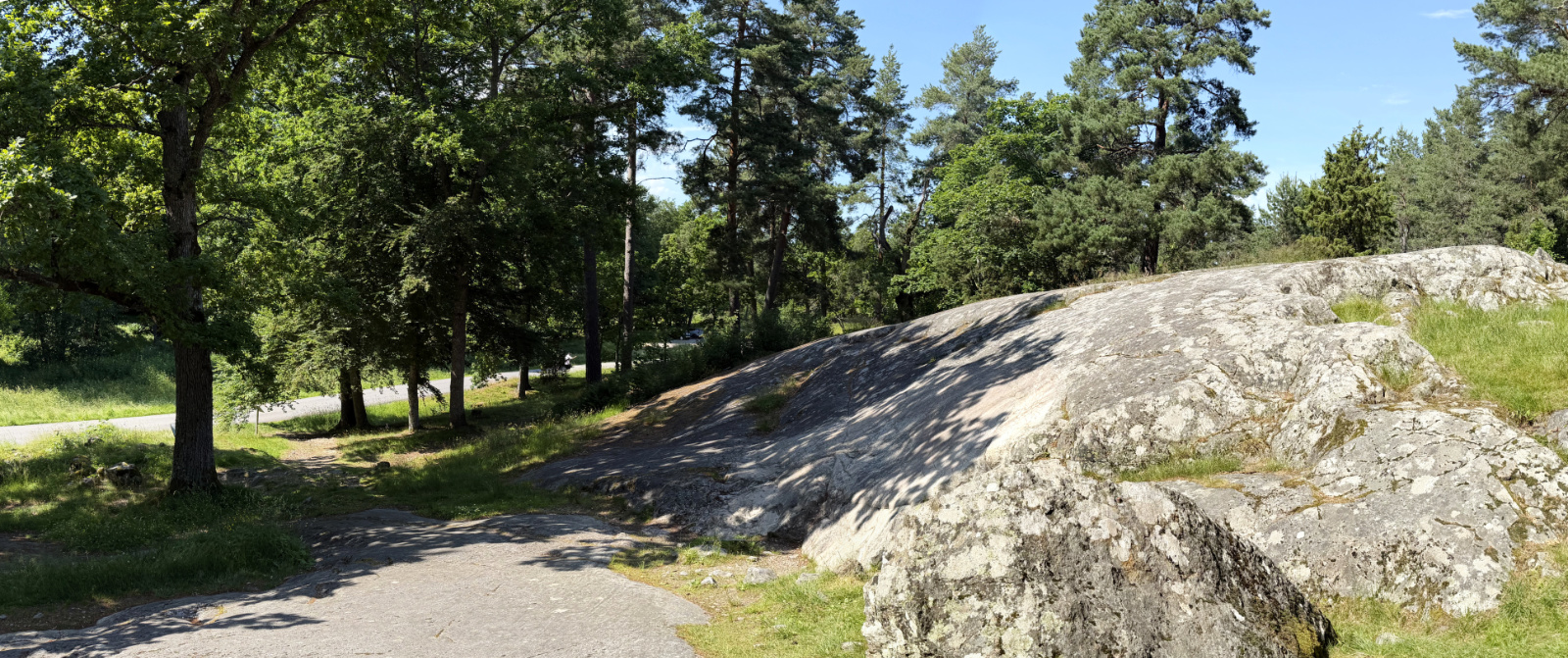
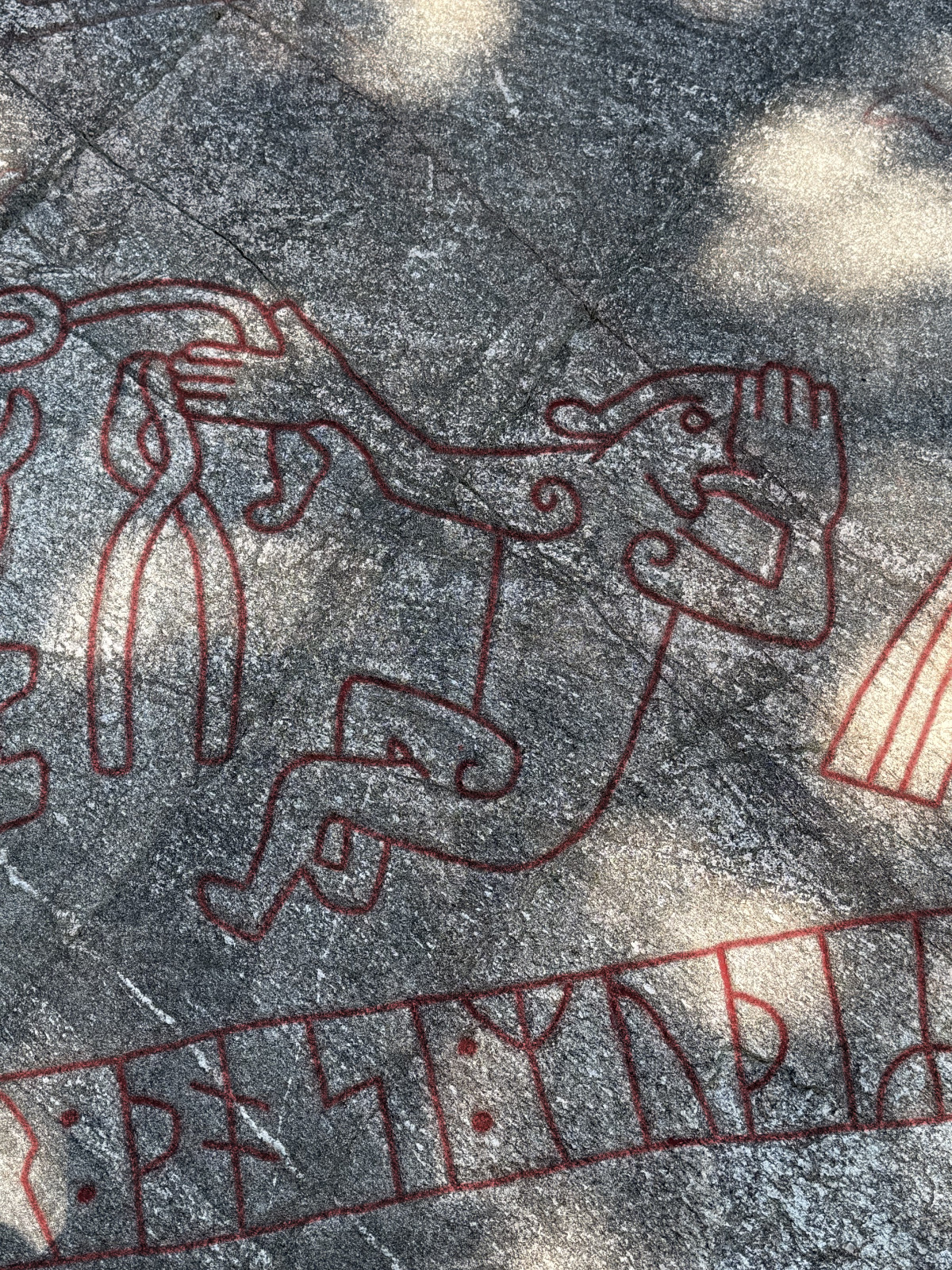
Anyway, Sigurdsristningen is a relatively well-known artifact by Viking Age Swedish standards,3 but commentary on it usually focuses first and foremost on the runic and legendary saga lore aspects, which is understandable since those aspects are unquestionably cool. But a sense of the current surrounding context is generally left out, which is a bit unfortunate. Because it’s not like this giant stone with an epic, highly illustrated runic carving on it has ever existed in a complete and utter void.
In fact, the whole point for its existence was to declare the glory of the woman who funded a substantial civic works project during the Viking Age. The inscription itself reads that a bridge was raised, which in turn provided the impetus for the carving. It states that not only was Sigrid responsible for the bridge’s construction, but that she undertook the project in memory of her deceased husband, Holmger:
Sigrid created this bridge—Alrik’s mother, Ore’s daughter—for Holmger’s soul (Sigröd’s father), her husband.
A bit clunky for sure,4 but that’s what it says (in that basic word order) in the runes that run along the slimy, slithering body of Fafnir. Bounded by Fafnir’s sick snake skin are scenes of the whole dragon-slaying incident and subsequent, highly memorable blood-tasting, bird-talking, and dwarf-killing moments.
Anyway, remnants of the bridge foundation still exist. The bridge itself doesn’t since it was probably made of wood. So no one really knows what it looked like, but it appears to have been a solid sixty meters long according to Sörmlands museum. The land has risen in the past thousand years like a squished sponge expanding in super slow-motion; water covered a lot of what is now land back in Viking Age Svealand (and elsewhere).
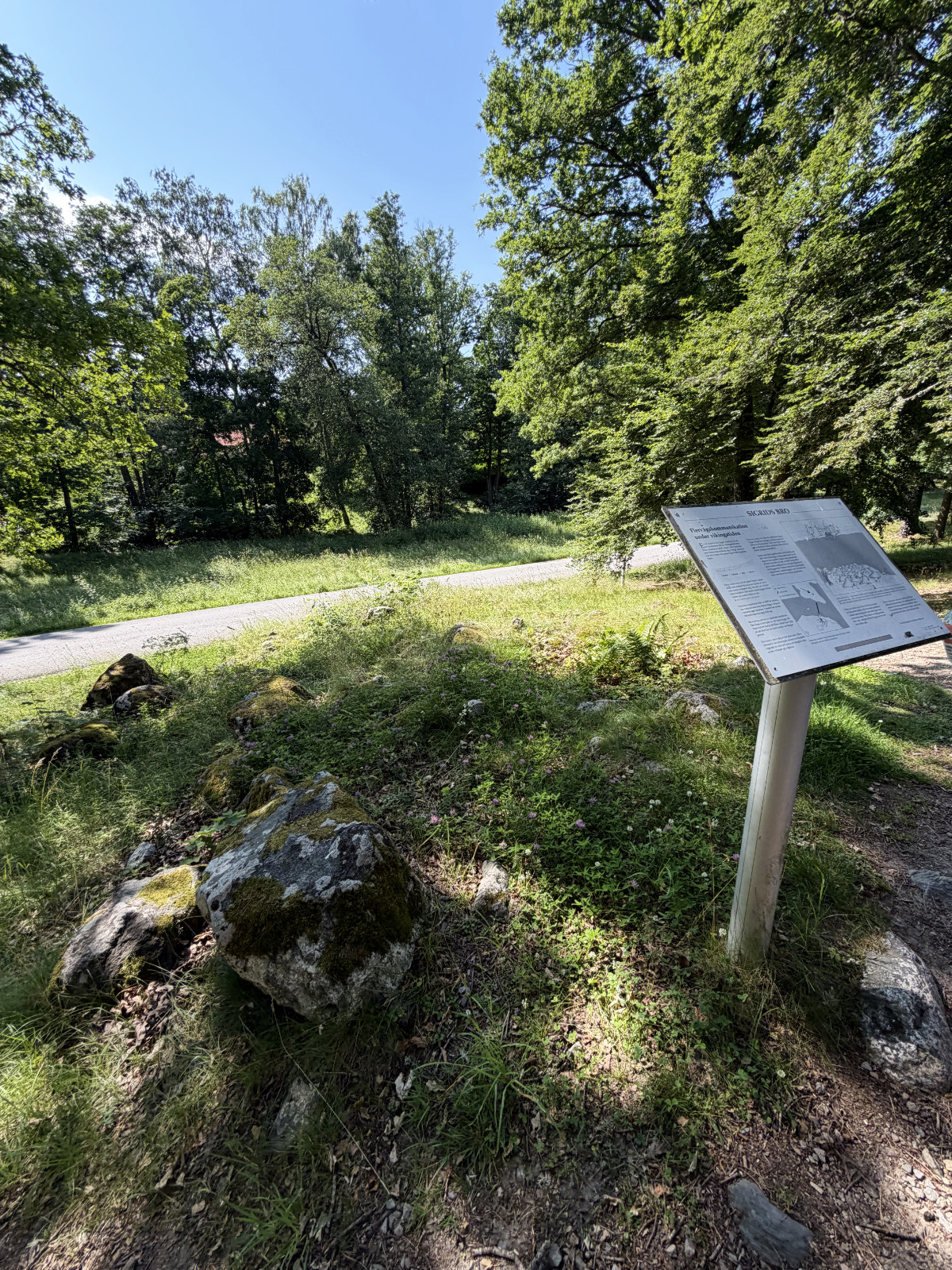
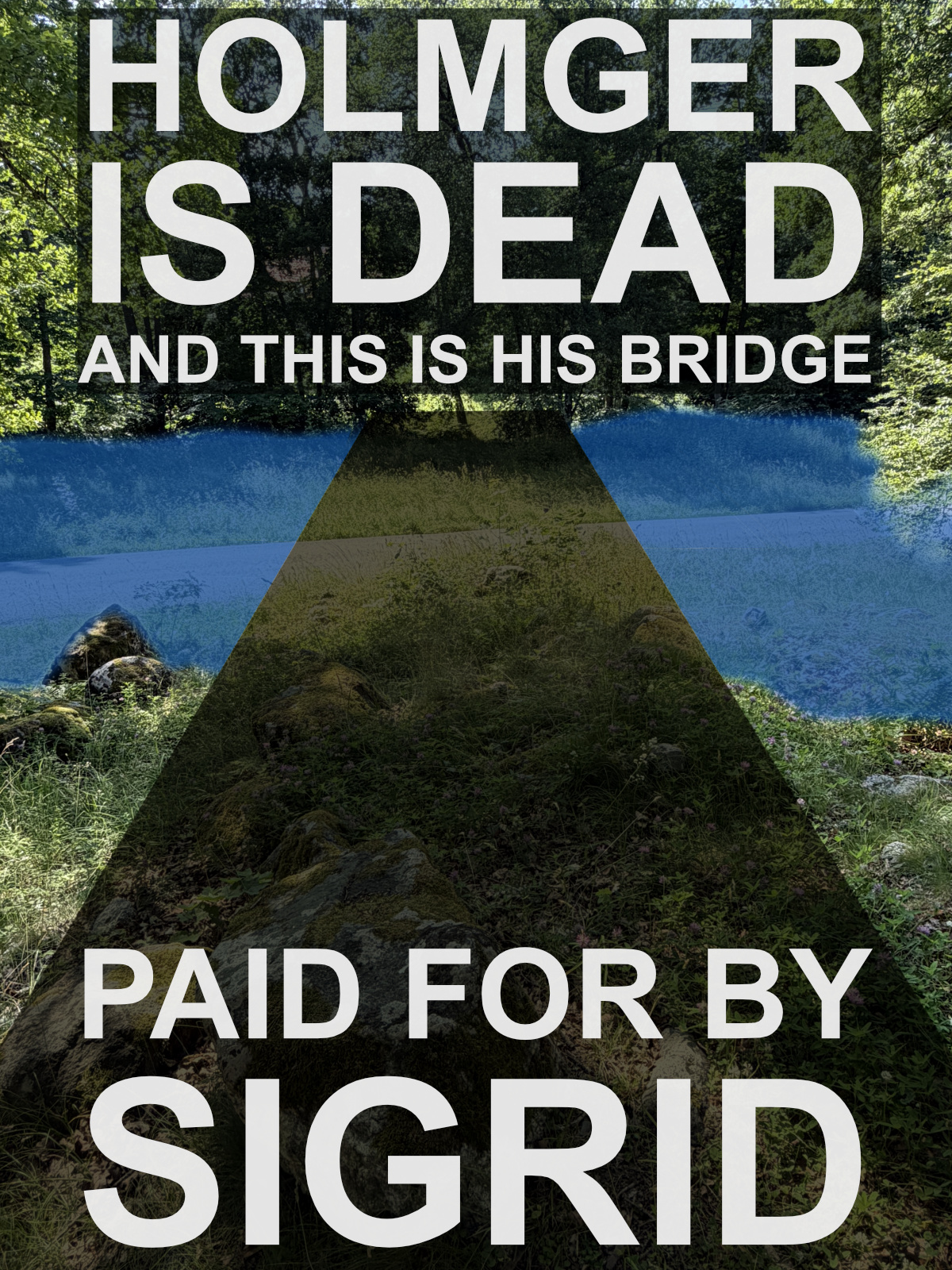
This particular waterway would have been regularly trafficked, granting Sigrid, Holmger, Ore, Alrik, and Sigröd a good dose of fame and glory, since that’s what it was all about. Maybe the convenience of being able to cross the water from one side to the other without being forced to swim or use of a ferry was a motivational factor, too, but the desire for fame and glory was definitely way up there. Shameless self-promotion is obviously a timeless human quality. But at least shamelessly self-promoted Viking Age civic works projects were valuable to the community and are still cool a thousand years later.
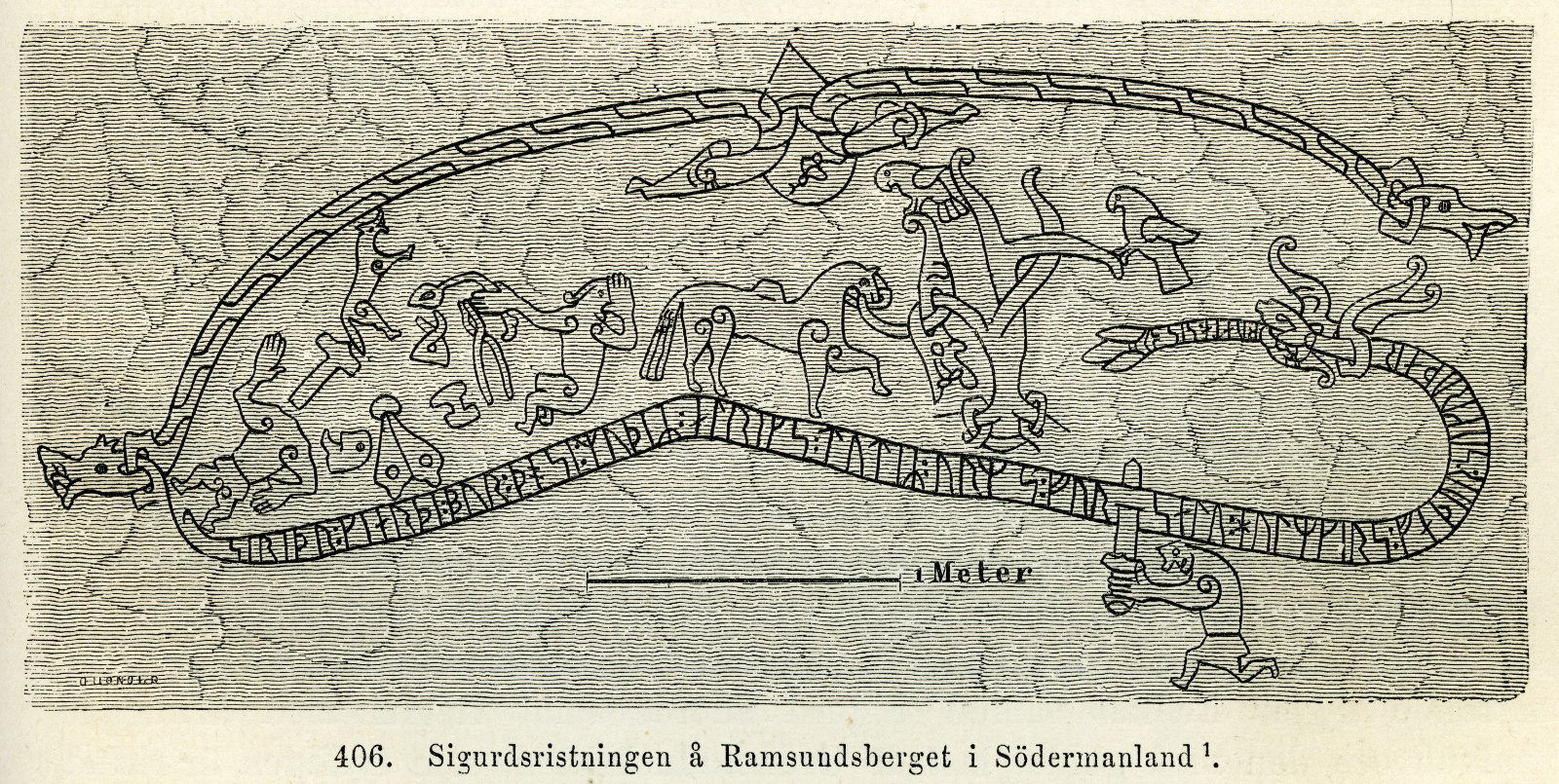
And one more thing while you’re here: check out the Medieval World magazine article and “In the Realm of Runes” image-heavy post linked to below if the Viking Age Svealandic landscape and runestones are up your alley. Tack och skål!
Och äntligen måste jag tacka Anders Lundgren för utflykten till Sigurdsristningen som hände den 27 juni i år. Det var den stora runstensafari dagen!
- At least until some sort of godforsaken Arctic oil war or hostile AI take-over results in the destruction of the boulder upon which this magnificent work of pagan art abides. ↩︎
- In case anyone is wondering, the two close-up images of the carving on this page were taken by me and then manually enhanced by me via tracing the pertinent parts with a red brush in photo editing software. I also did the sloppy transparencies on the “Holmger is dead” image. No bullshit AI! ↩︎
- In other words, absolutely obscure, but people who nerd out on this stuff tend to know what it is. ↩︎
- My translation to English from the Swedish translation of the original runes as provided on the informational sign at the site; the corresponding English informational sign doesn’t actually even provide a translation of the runes, just a recap of their meaning. Punctuation of my own invention to help clarify it all. You can probably find a smoother translation on Wikipedia or somewhere if you feel so inclined. ↩︎
Subscribe to get updates from Scandinavian Aggression!
You know, if you feel like it or whatever. You'll receive a code for 25% off any combination of items at the Puffin Carcass Etsy Store, including signed copies of The Impudent Edda and The Scandinavian Aggressors. Other discounts are included in the newsletter that is sent out to subscribers, which only happens when new nonsense has been posted to the site. Your email is only used for the purpose of sending those updates. It's stored in the secure abyss of WordPress and not shared anywhere or anyhow else. Skål som fan!