
Felix Luyckx is a Belgian fashion designer and garment maker based in Antwerp. A graduate of the SASK Fashion Academy, Felix’s garments are made by hand and draw on elements of history, folklore, the natural world, and Norse mythology. His garments have been featured on the Vanity Fair France website and worn by the Icelandic artist and musician, Björk, in Paris, Bordeaux, and Reykjavik. Felix operates the clothing brand and webshop Felix Forsyth (formerly Garments by Felix) which focuses on his Norse mythology inspired designs.

RG: Welcome, Felix! I’m very glad to have a chance to chat with you about your work, which I think falls into a category that those of us who harbor this fascination with all things Norse don’t tend to see very often. By which I mean, to start with at least, your fashion designs and garments inspired by Norse mythology and history. It’s a fascinating convergence of worlds. It seems to me that it’s a little more common to come across people who are crafting Norse clothing intended for the reenactment crowd, while you’re differentiating yourself by working with modern fashion. So, to start things off, what led you to combine modern fashion and garment making with Norse mythology and history?
FL: Hi Rowdy. Thanks for having me! To pinpoint the moment for you: when Robert Eggers’ The Northman came out in April of 2022. Up until that point, my knowledge of Norse mythology had admittedly been basic because, I think, it’s not as widely popular as its Greek or Roman counterparts. I’m confident that Eggers’ film changed that for the better by bringing it to a large audience. Eggers is very big on historical accuracy so I learned quite a lot from his film. In fashion, that’s what you look for: under-explored realms to draw inspiration from. Nordic mythology is massively interesting, contains a healthy dose of horror, and is, in my opinion, underrated. It’s more than Mjölnir necklaces and Marvel’s Thor.
I think reenactors are important to keep folklore alive with historical dress and big furs, and I’m happy to do my part in keeping it alive through my work.
RG: That’s cool you mention The Northman as a defining moment. I also thought the movie was great, but I know it received reviews that varied quite wildly. Some of us thought it was great storytelling with wonderful visuals and a keen eye to historic detail. Others thought the characters and their motives were so unrelatable so as to diminish the entire film. It could be argued that it’s something of the reverse side of the coin to History’s Vikings which was big on drama of a relatable, low-hanging fruit variety, but historical reality went out the window on it. But it was hugely influential and I usually hear about it being responsible for more people becoming interested in all things Norse than The Northman. Did you ever watch that show yourself, and if so, what did you think of it?
FL: To be honest, I don’t think you need to relate to all characters, I think that just adds to the mysterious and eerie feel of his work. That’s the thing about film, you don’t always have to feel pleasant or too understanding of what unfolds in a story to enjoy it or be captivated.
As for Vikings, I haven’t watched it and I think that has to do with the fact that everything I’ve seen and heard about it is fairly stereotypical. Which makes me a bit reluctant. It’s still on my watchlist though, maybe more for the sake of entertainment.
RG: That’s probably the best way to approach it. Anyway, enough of that show for the moment! What draws you specifically to Norse mythology and history to use as an inspiration in your work?
FL: I’m drawn to pagan folklore and pre-Christian cultures. There’s a certain individuality that’s a lot less present as history (and the widespread religions) progressed over time. And remember, individuality is king. I sort of wish more people in Europe still practiced polytheism. It’s so much more interesting. And this is coming from an atheist.
RG: The imagery of such cultures, at least what we know about them at this point in time, is certainly fantastic, and their influence on the designs of the shirts and jackets available on your webshop is very apparent, which is really cool. The Oseberg ship prow logo and design in particular pop out at me, but I also see the connections to ravens, serpents, and runes, too. How do you go about determining the Norse themes you choose to represent?
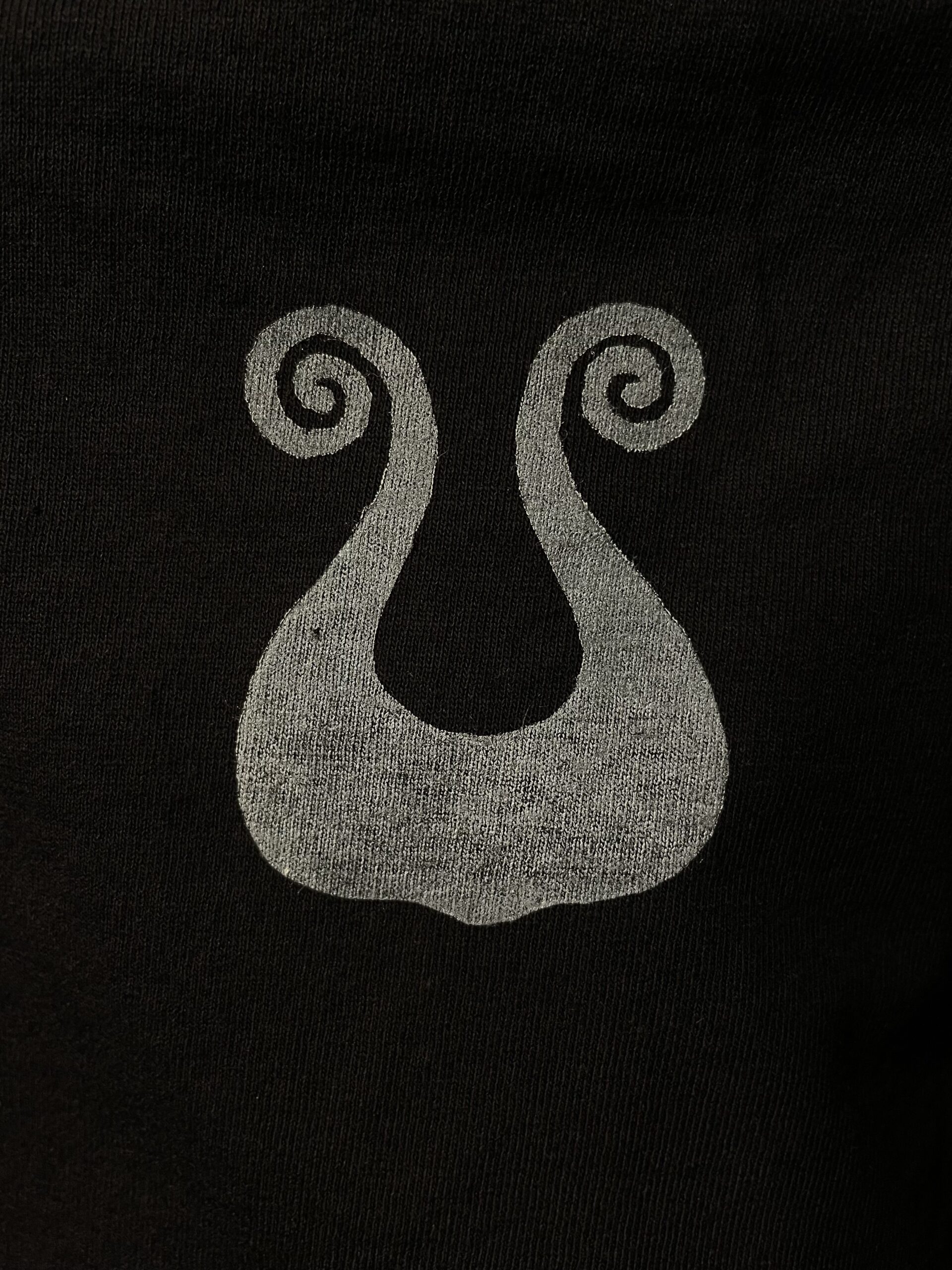
FL: I like to take things quite literal as far as imagery goes. Meaning, when a look or garment is inspired by Odin’s ravens, I’ll stitch two ravens on a shirt. Or his horse, Sleipnir, on a pair of jeans. I suppose I’m quite straightforward in that regard. Whatever theme a collection has, I’ll want to make sure to utilize as much elements as possible, so that you see the inspiration behind it at first glance. Though I also like to add details that you won’t notice right away: all runes featured on clothes have meaning to them, you’ll just have to translate them yourself!
As for the longship symbol, that will remain my logo for future collections. A boat signifies progress: slower, but steady. Which is relevant to the way I’m working now; I’ll take more time than what’s the norm in the fashion industry, but I’ll give you result regardless.
RG: Speaking of the way you work, can you explain a little bit about your process? Design and physical making are two different albeit complementary things, so how do you go about doing both the design and the making?
FL: Inspiration comes naturally to me because whether from a film, a painting, a certain historical period, or just a random moment or feeling, these are the things that keep me busy in my day to day life anyway. In my head, they’ll translate to a print, a sleeve shape, or simply a color combination. I take a lot of notes on my phone of random ideas and shapes which sometimes get lost in a sea of grocery lists, so it happens that I only use these ideas a year later or not at all. Then, I make everything, except for t-shirts which I buy and then work on, myself here at home in Antwerp with the help of my mother who is a seamstress. Craftsmanship and quality are very important to me. I have what some may call unhealthy perfectionism, which I guess is a blessing and a curse.
RG: Some things in life understandably just can’t be anything less than perfect. But in terms of the t-shirts that you mentioned—that you work on ones you purchase—what does that mean exactly? Are you applying prints to them or embroidering patterns onto them or something else entirely?
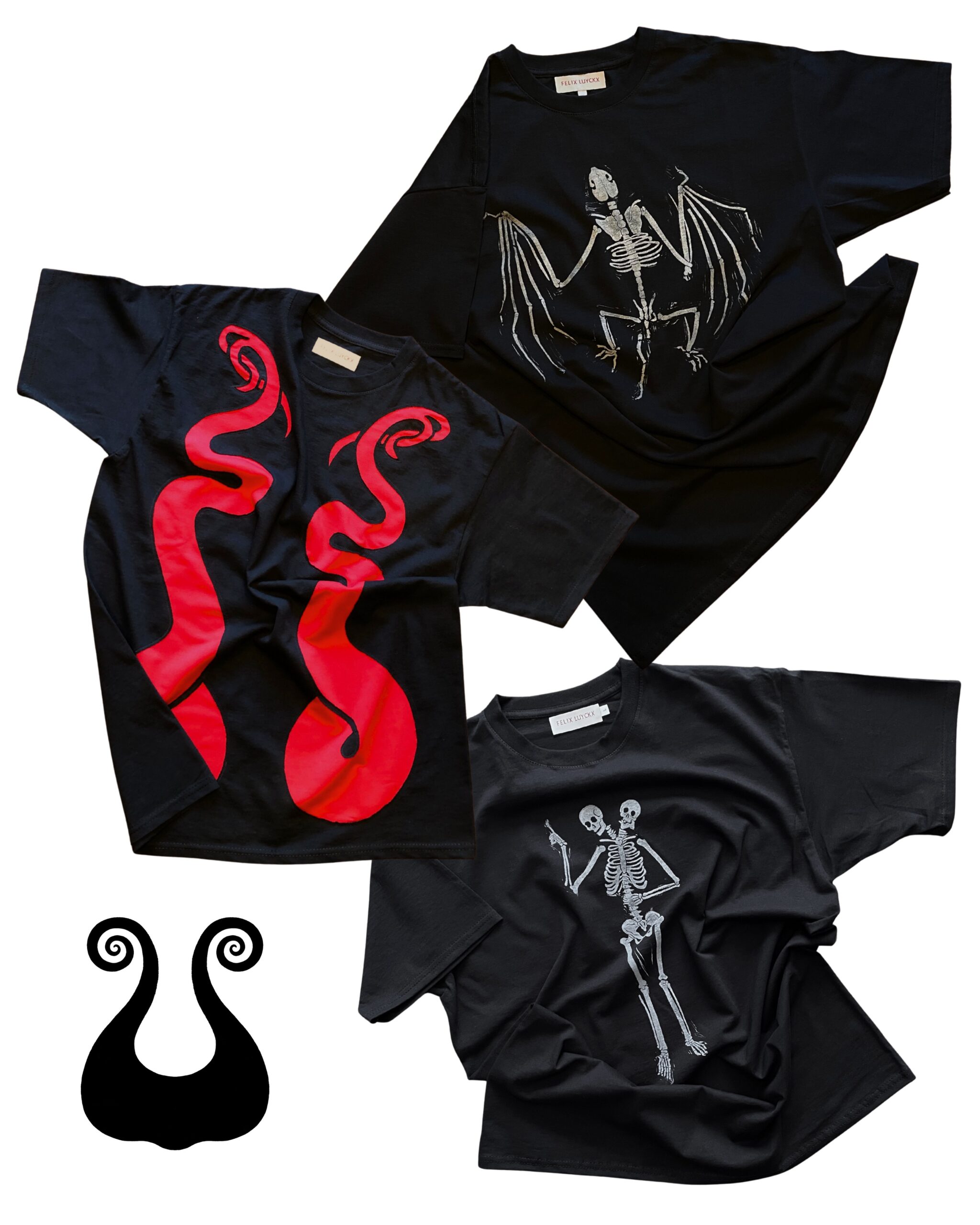
FL: So there’s two ways I work with a t-shirt. First, there’s the more simple printing. I currently do this by carving out a design using linocut and printing it. Secondly, by using a cutout in a contrasting fabric by cutting away along the stitchline of a design, revealing the layer of fabric underneath. That way you can give the eternal classic garment your own spin while keeping it wearable.
RG: I’ve also seen that you also held a show or exhibit a couple years ago called Gunnar & Brünhilde. I think those of us familiar with Volsunga Saga and/or The Ring Cycle will recognize these names. What did this show/exhibit involve? What was it all about?
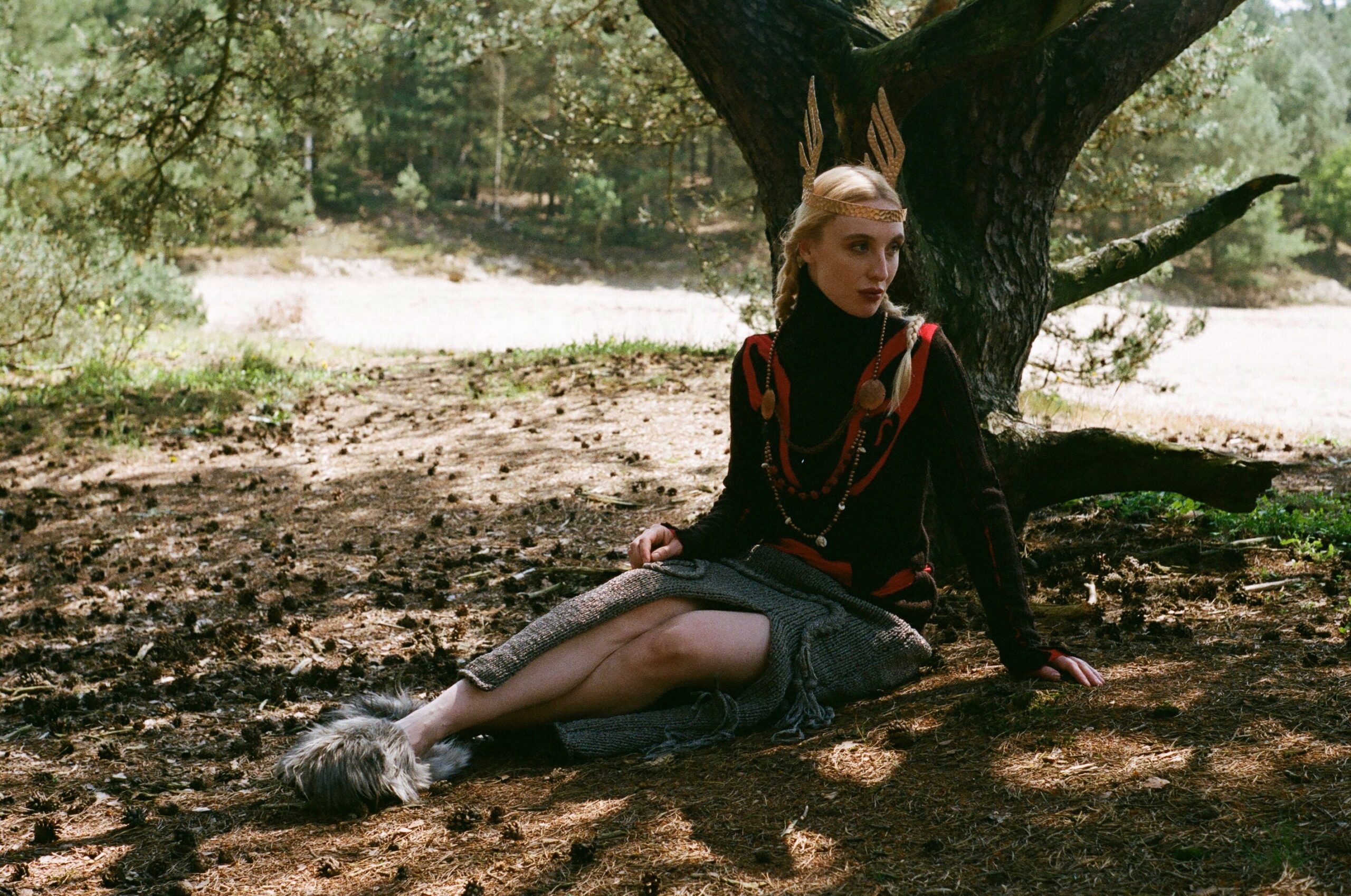
FL: This was my graduation show at school in 2024. I first graduated in 2022 and then continued with a specialization program of two years which culminated into the viking collection. For the theme I started out with the figure, Brunhild, which has ties to both German and Nordic legends. The former links to The Nibelungenlied or Ring Cycle, the latter to the vikings and their folklore. I also referenced Gustav Klimt’s work attire and Art Nouveau, which visually links to Nordic ornamental art, to bring it all forward to our modern age.
This was where the Garments by Felix wearable collection was born out of.
RG: And speaking of wearable, we must talk a bit about Björk! So she wore a garment of yours in both France and Iceland as I understand it. What was that like, and was the garment she wore one of your Norse-inspired ones?
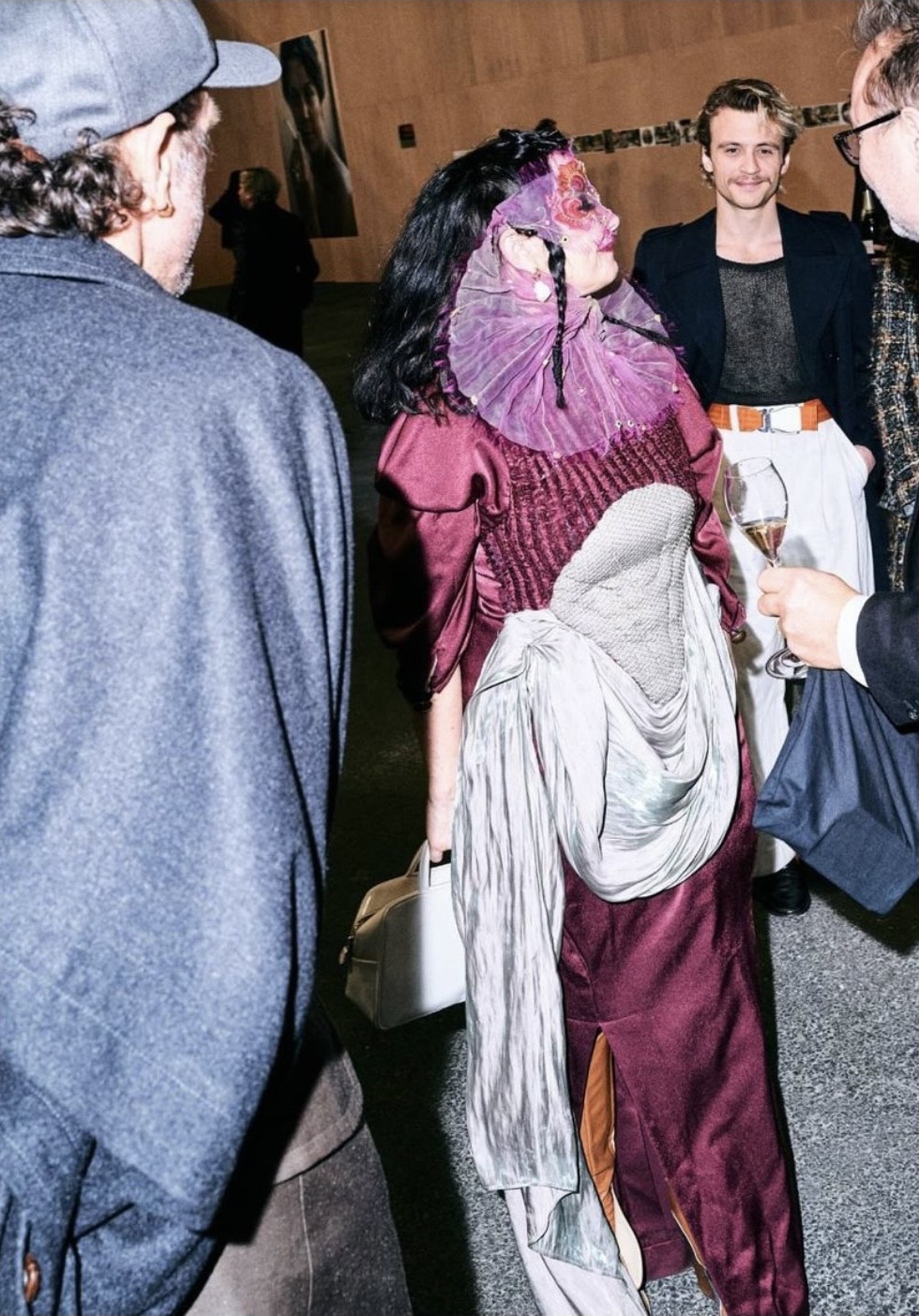
FL: Yes! She did, and it actually wasn’t a Gunnar & Brünhilde number. It was a dress from my 4th year collection titled Dochter van ‘t Scheldt (Daughter of the Scheldt River), which was inspired by a narrative I made up about a family of merpeople who crawled out of the water into medieval Antwerp and adapted to human life.
She was supposed to wear it at the end of the Bordeaux show of her Cornucopia tour, but due to there being too many buttons to fasten in a short time, it was decided she’d wear it to an after-party later that night. At which I met her wearing the dress, the most surreal moment of my life. She thanked me thoroughly for it while holding my hands which made the moment even crazier because, you’re thanking me? She was just incredibly nice. She owns that dress now and has worn it to DJ sets and events since.
By then I was already working on the viking collection, so it’s a happy coincidence that this Icelandic queen also has a tie to my work.
RG: That’s awesome. It sounds like a truly unforgettable moment. And a cool concept behind the collection that dress was a part of, too. Was there any particular folklore, local or otherwise, that factored into your narrative about merpeople from the Scheldt River?
FL: I researched the European history of mermaids of the medieval and Renaissance periods, which is a wildly interesting rabbit hole that brings you to creatures like the bishop fish, the sea monk and the sea satyr. Crazy times for zoological scholars.
RG: Haha, I bet! The creatures of old lore are always so fascinating. So, what are some of the other inspirations besides Norse mythology and history that shape your work? I know that folklore and the natural world are inspirations. Is there anything specific to either of those categories that you feel is particularly prominent for you?
FL: This New Year’s Day I was walking in the South Belgian woods with my family when it had just snowed, and the dark tree branches on a pure white background with an orange sky creeping in as the day grew older inspired me for some dresses I’m working on at the moment. So any moment or memory that feels particularly magical always stays with me. Along with, of course, folklore. That is my one bottomless well of inspiration.
RG: So, what’s in store for 2026? Any new designs, shows, or anything else you have coming up that we can expect to see in the new year?
FL: Well, firstly, I’m not going forward with the Garments by Felix name. I’ve thought for a long time about what I should call my brand and what does and doesn’t work for me. But it’s been there all along, really: I’m taking my mother’s Scottish family name, Forsyth, which makes sense as my passion for making clothes started with my mother and grandmother. And I’m leaving the more simple shirts and sweaters be for a while.
I’m working on my first full collection that is entirely purchasable and made to order using deadstock fabrics, to be revealed in the next few months. In which I’m returning to more elaborate dresses and jackets like I did in school, yet still just wearable enough. It’s time for that next step.

RG: Sounds like a positive change of direction. What will be the new name of the business/webshop and where will people be able to find your collection if not at Garments by Felix?
FL: Felix Forsyth. My social accounts will be updated with the new name soon, as will my website, changing to felix-forsyth.com.
RG: Good to know—name changes can be tricky, so I hope the process goes smoothly. And now, one final question just for fun! If you could have any figure from either Norse history or mythology come to life and model any selection of your garments here in the 21st century, who would you choose and what sort of garment or garments would you design and make for them?
FL: The valkyrie with the longest blondest hair! Wearing something suitable for horseback yet flows in the wind.
RG: An iconic image! I can certainly understand that choice. Anyway, Felix, thanks for taking the time to chat about your work, and best of luck with the new endeavor!
FL: Thank you Rowdy! It’s been a pleasure chatting with you.
Dear Web Prowler, since you’re here, please check out Felix Luyckx’s work and give him a follow on social media via the links below:
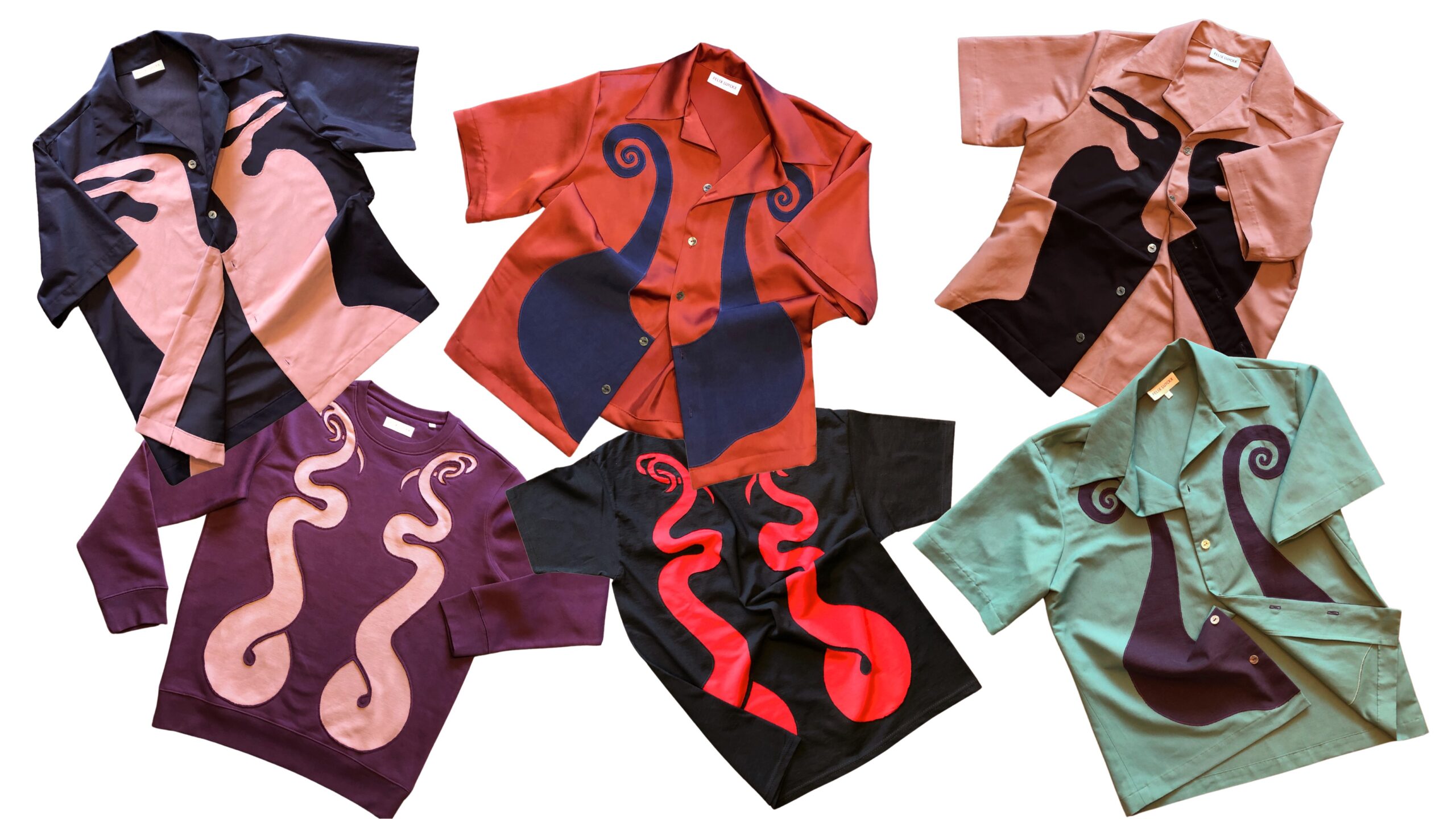
Unless otherwise noted, the images associated with this interview are all courtesy and copyright of Felix Luyckx
Subscribe to get updates from Scandinavian Aggression!
You know, if you feel like it or whatever. You'll receive a code for 25% off any combination of items at the Puffin Carcass Etsy Store, including signed copies of The Impudent Edda and The Scandinavian Aggressors. Other discounts are included in the newsletter that is sent out to subscribers, which only happens when new nonsense has been posted to the site or whenever there is a discount going on at the Dashery store. Your email is only used for the purpose of sending those updates. It's stored in the secure abyss of WordPress and not shared anywhere or anyhow else. Skål som fan!