
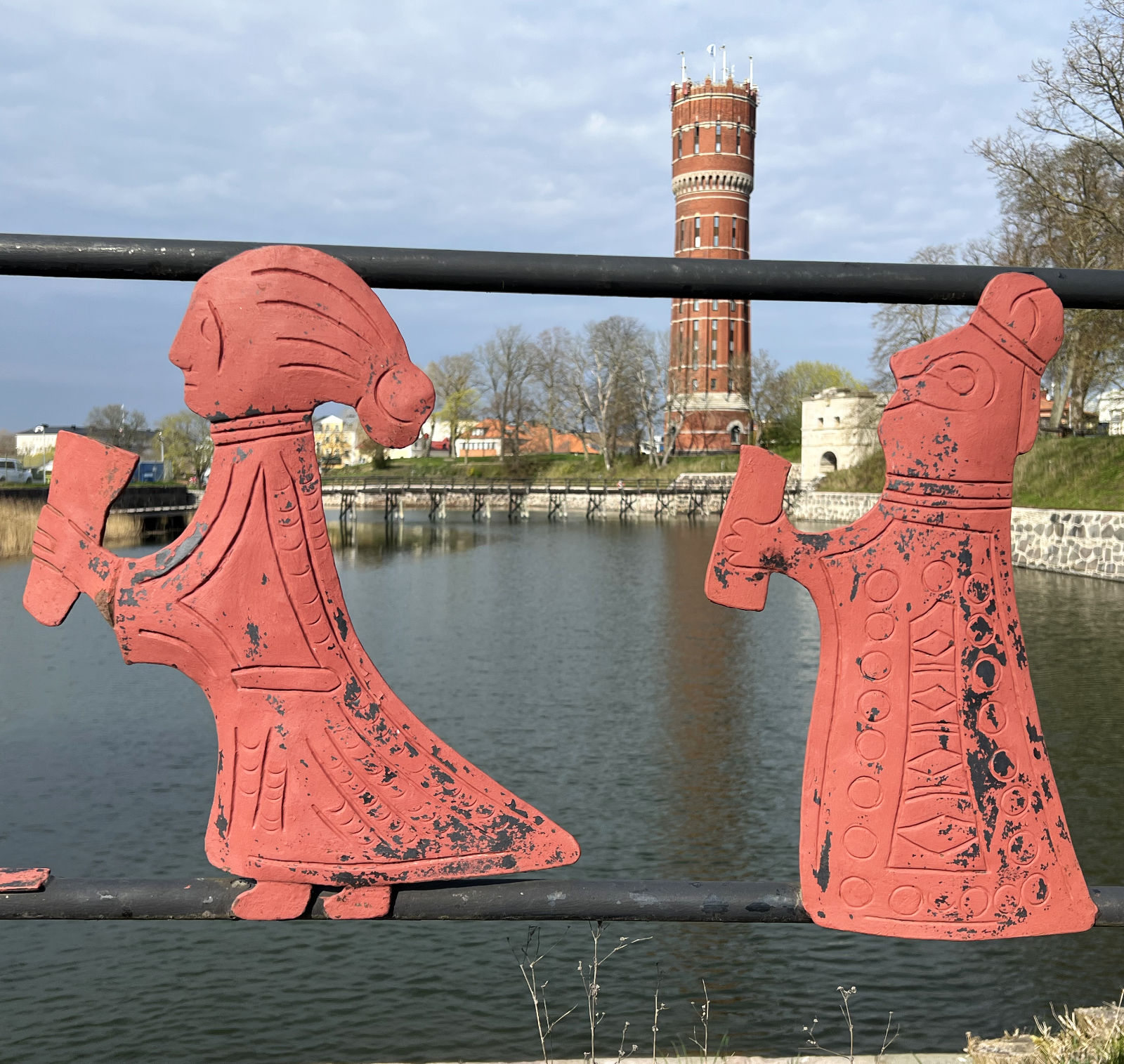
In central Kalmar you may observe valkyries as they carry drinking horns across the waters of Systraströmmen. The valkyries are shuffling away from the central station, and while the exact destination of the valkyries in this mortal corner of Småland1 remains unknown, we can only presume that they intend to deliver their special elixirs to fallen public transit users. Or perhaps to individuals who have survived a day of grueling work and could really use a drink. Or even people who have just shown up for work and theoretically need a drink even more so. The various possibilities of types of recipients worthy of valkyrie-brew in central Kalmar is quite limitless. But one thing is certain: the valkyries are there, doing their horn-carrying thing amidst a snarl of train and bus traffic. And their grand procession is joined by bear-warriors, ancient cavalry, spear-dancers, and, of course, loopy serpents.
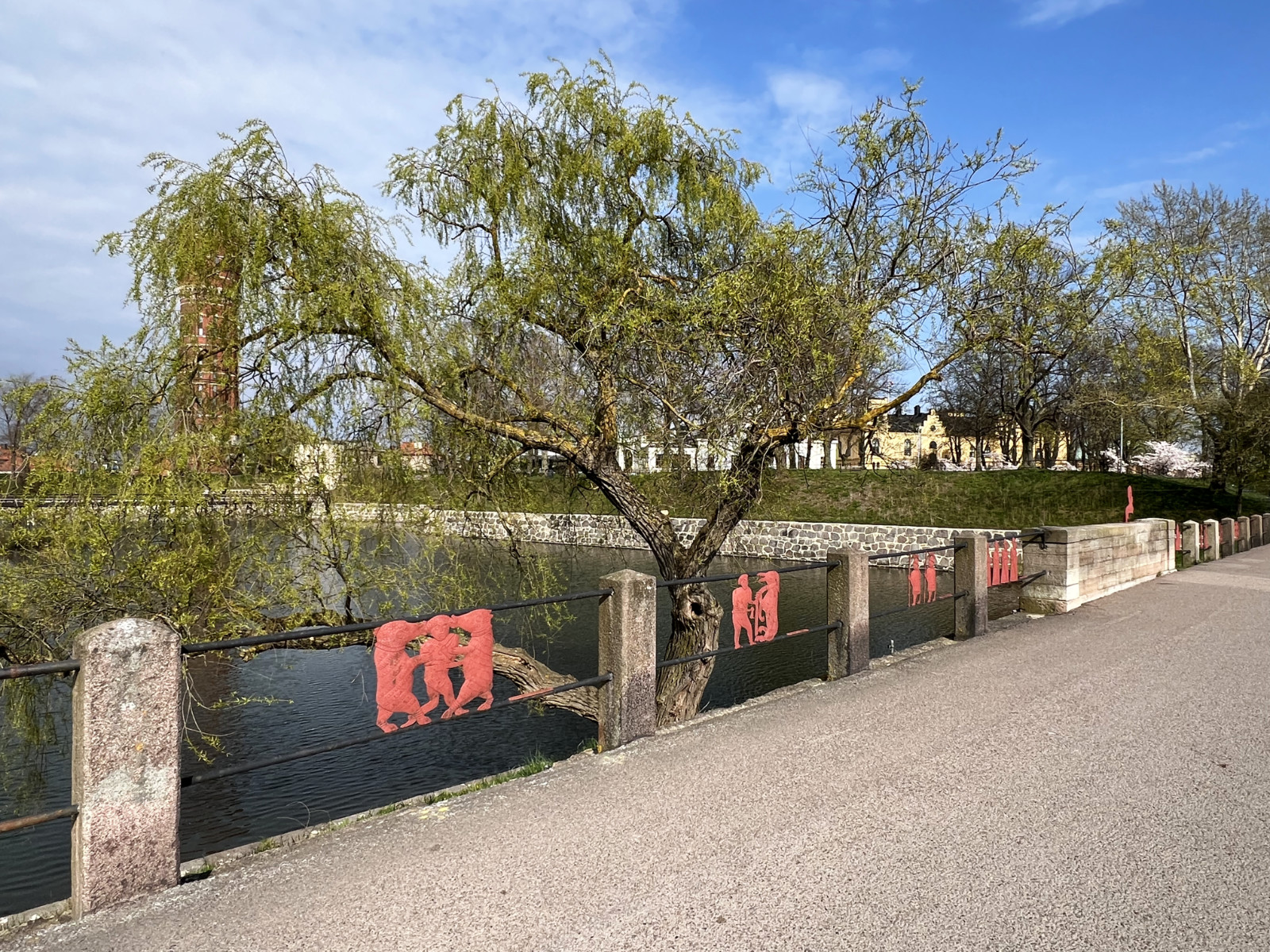
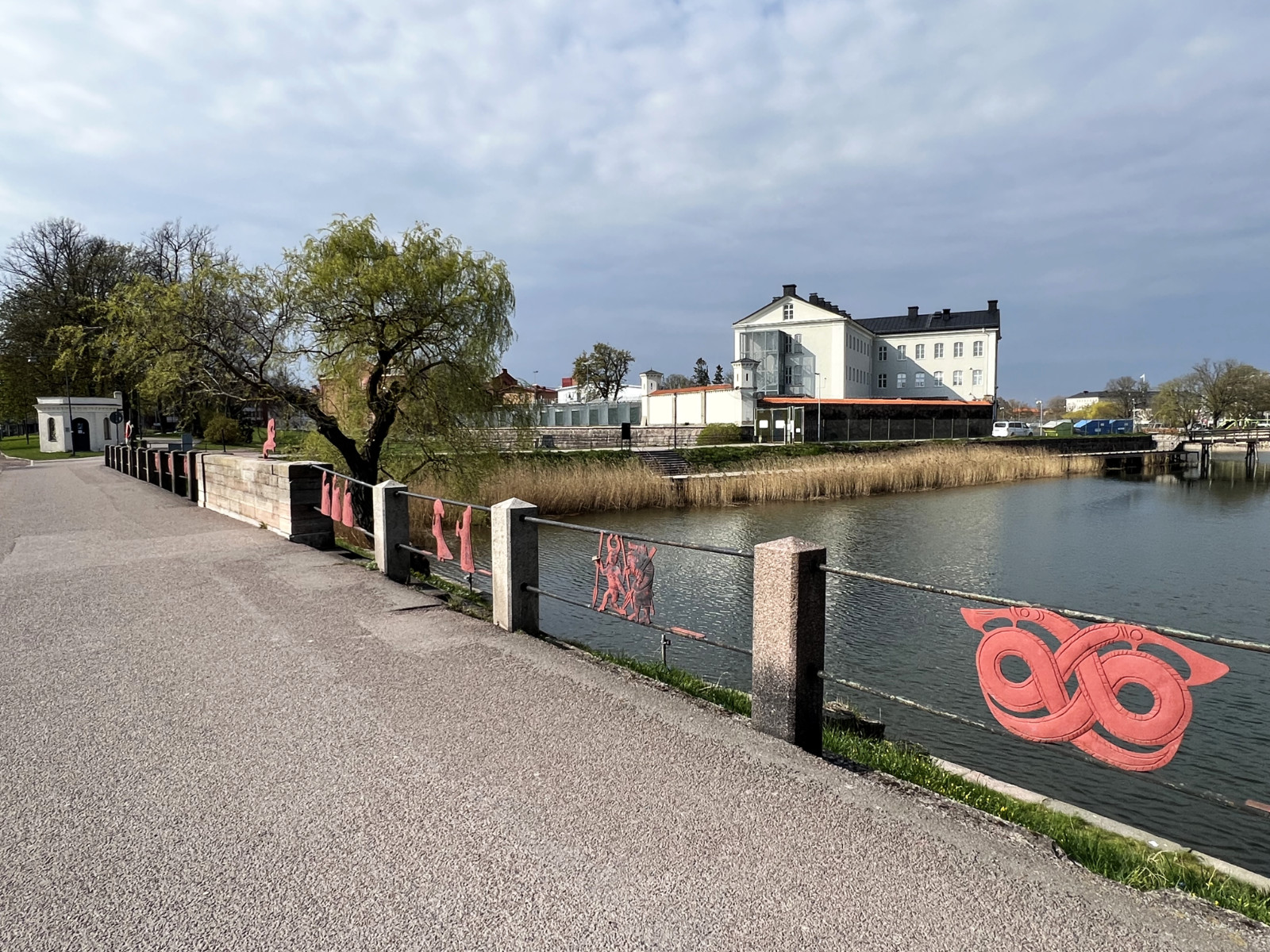
Anyway, such is the scene that awaits pedestrians at Tullbron,2 which is the otherwise unassuming bridge that connects Kalmar’s core island of Kvarnholmen with the rest of the city via Olof Palmes gata (Olof Palme’s Street). The adornment of the railing at Tullbron consists of nine3 distinct pieces of cast iron artwork, each representative of a historic artifact found in the local area. They have been painted red—and I must admit that this my own speculation—to both call to mind the red coloration applied to runestones throughout Sweden and to play off the timeless Faluröd4 so important to the Swedish national image (a color choice that can likely be said of the paint applied to the runestones, too). The artwork was created by sculptor and metalsmith, Lars Larsson, in 1986.
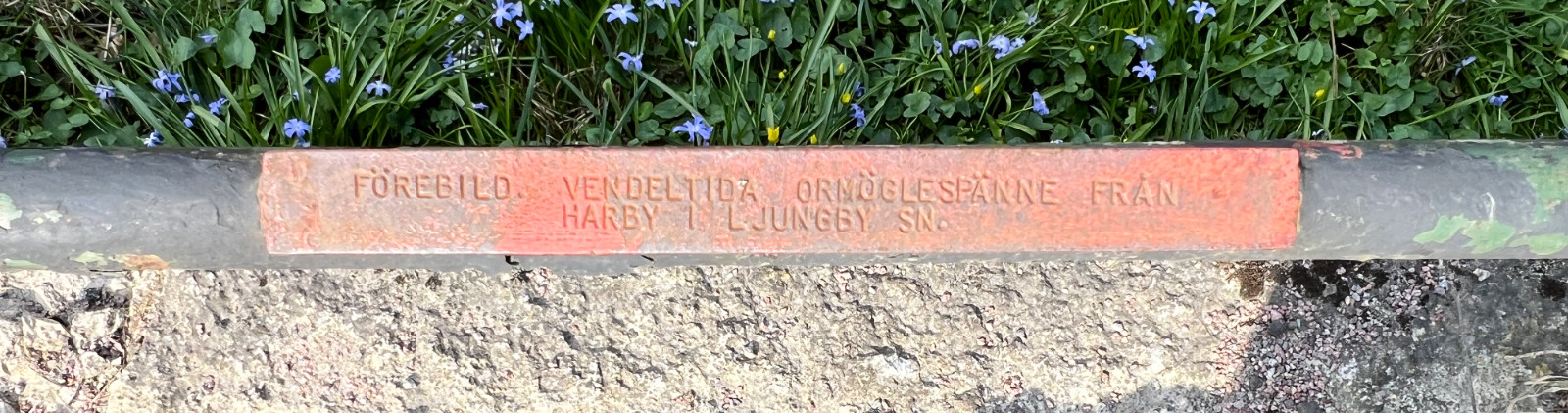
Titled Ur Kalmars historia, Larsson’s artwork is just one of more than twenty public art installations in central Kalmar. The others, alas, don’t find their inspiration in ancient Nordic artifacts. And that’s pretty much it. What follows below is a slideshow of each of the nine pieces that comprises the complete installation beginning at the end of the bridge closest to the station. I’ve provided information about each one—essentially a rough translation of the descriptions provided on site like the close-up shown above for the serpent loop buckle. I’ve also included links to the original, inspirational artifacts as found in the database of Historiskamuseet (Sweden’s fantastic national historical museum in Stockholm) where you can view the museum’s own collection of hi-res, professional photographs of most of the objects. Skål!
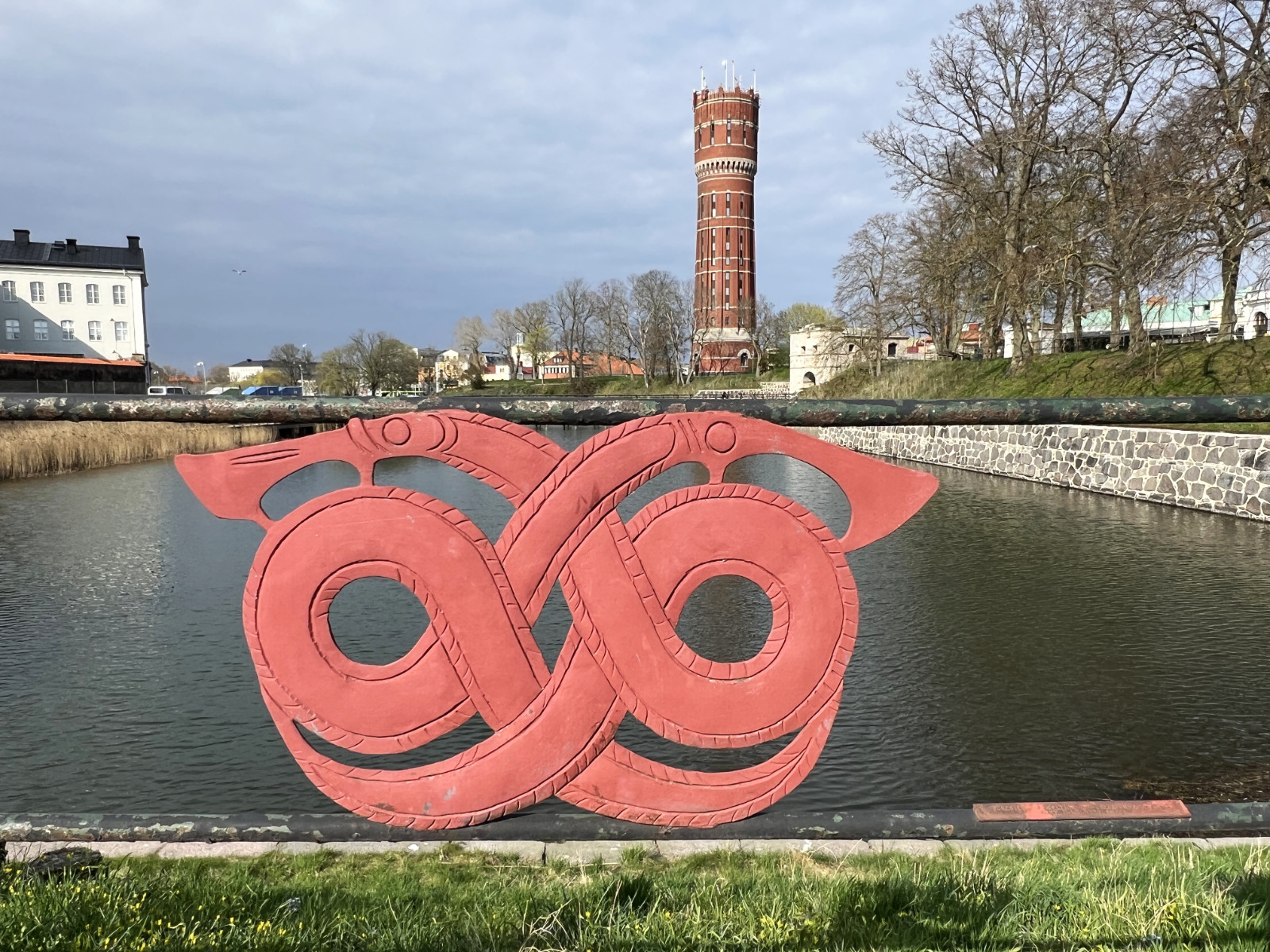
#1: Vendel Period Serpent Loop Buckle from Harby in Ljunby (971363_HST)
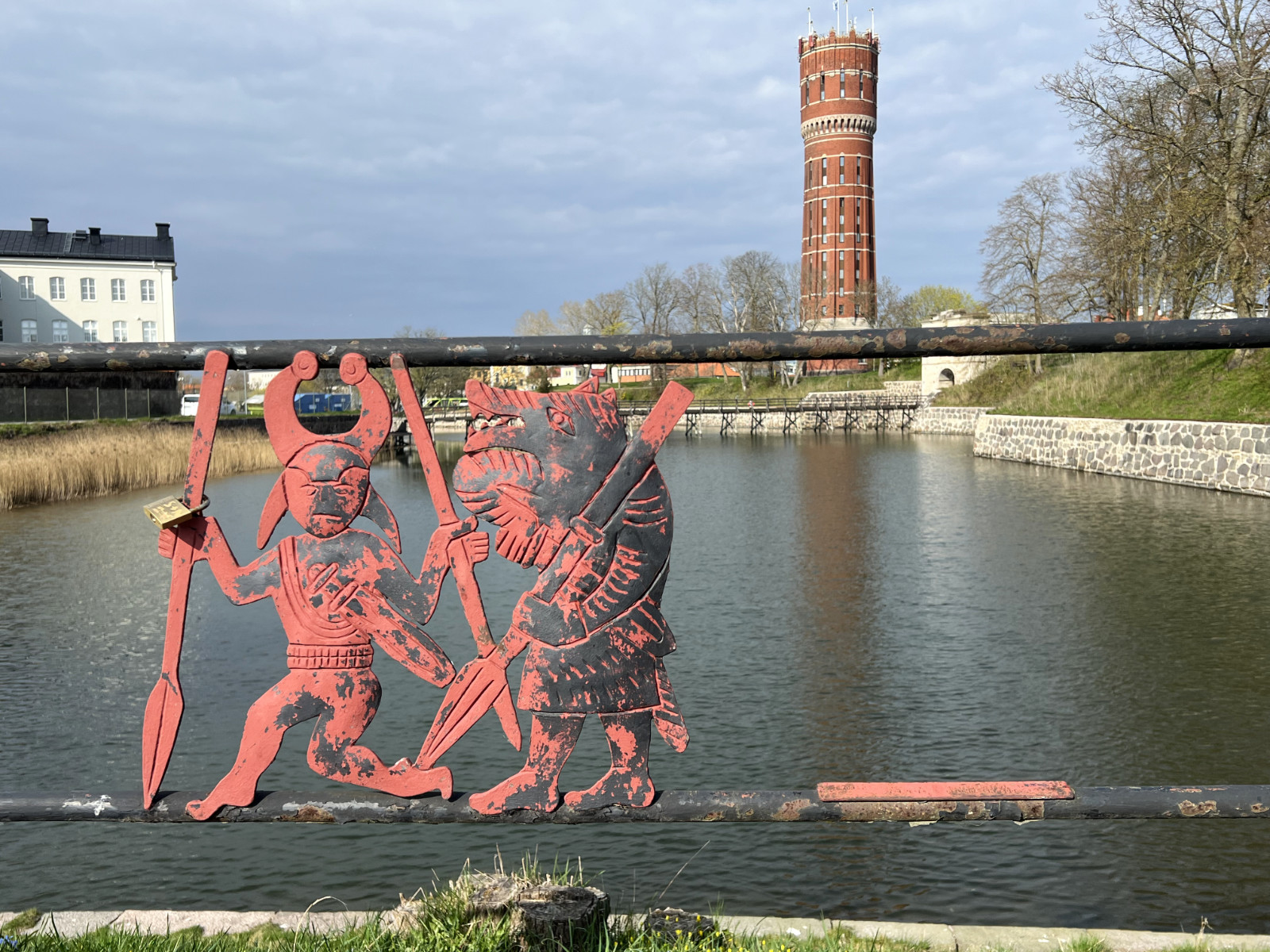
#2: Mould for bronze plates from Björnhovda in Torslunda 600s (618349_HST)
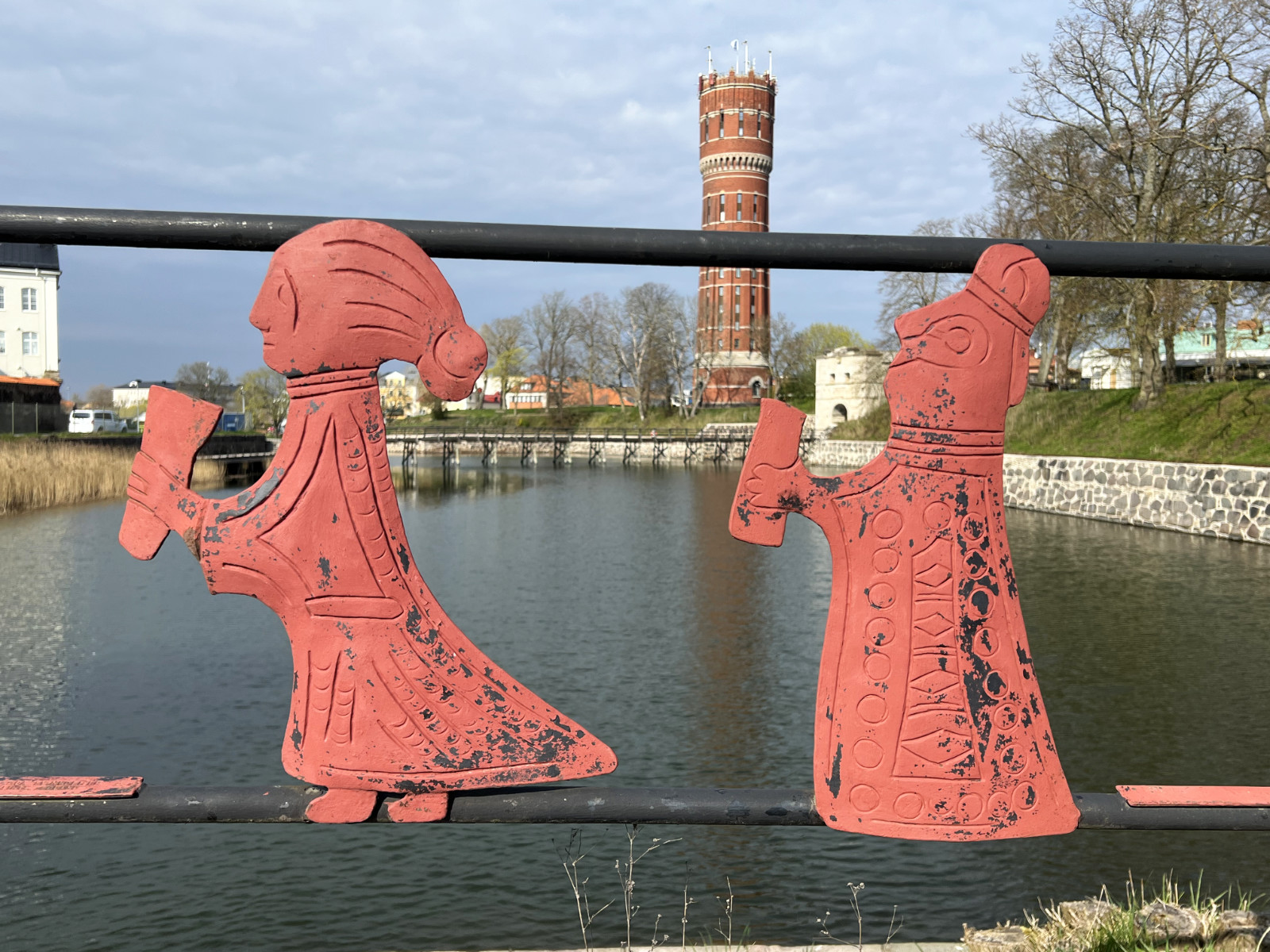
#3: Viking Age female figures with drinking horns Öland (108864_HST and 266707_HST)
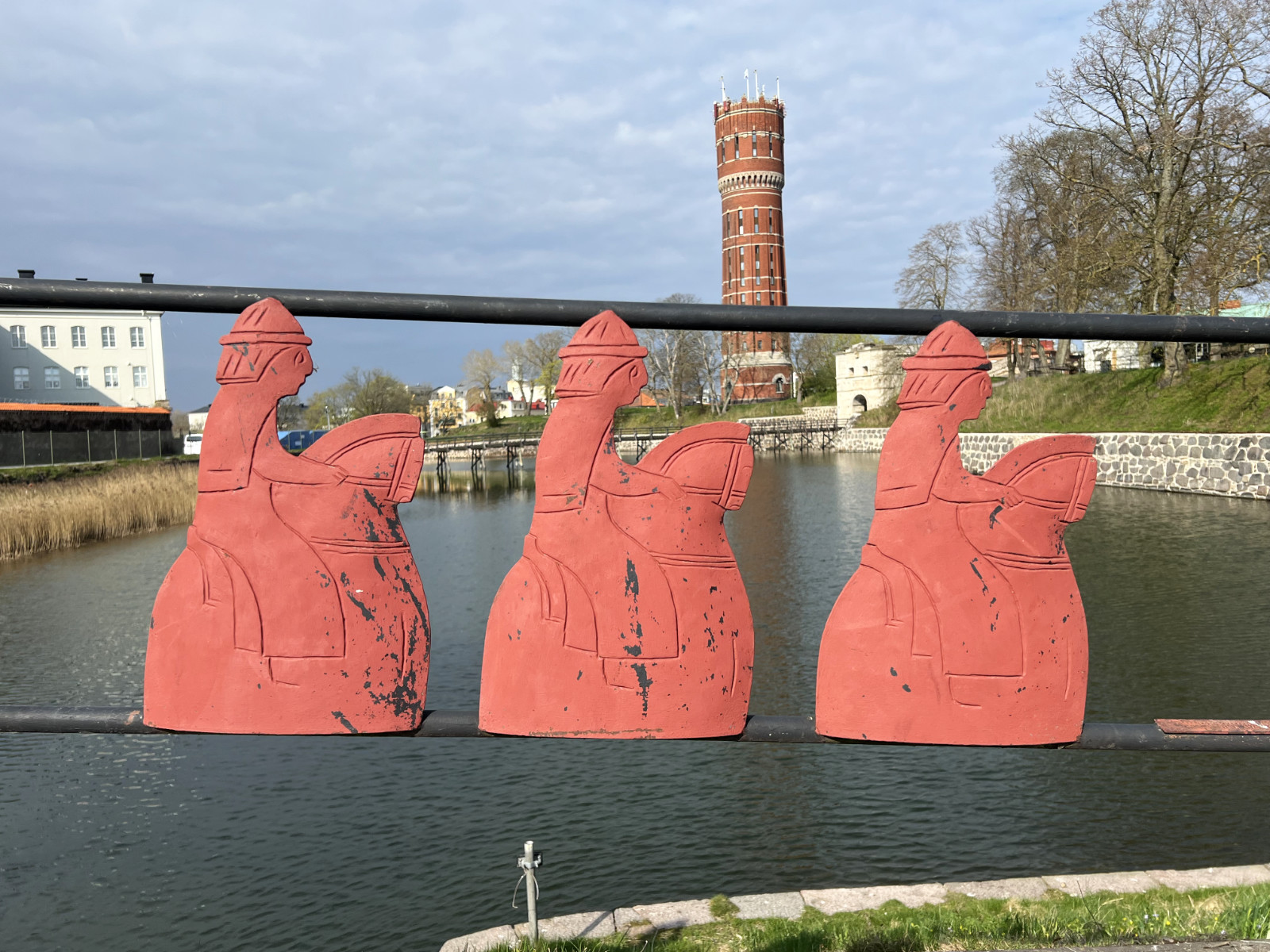
#4: Chess pieces from old town Kalmar Medieval Period (41655_HST)
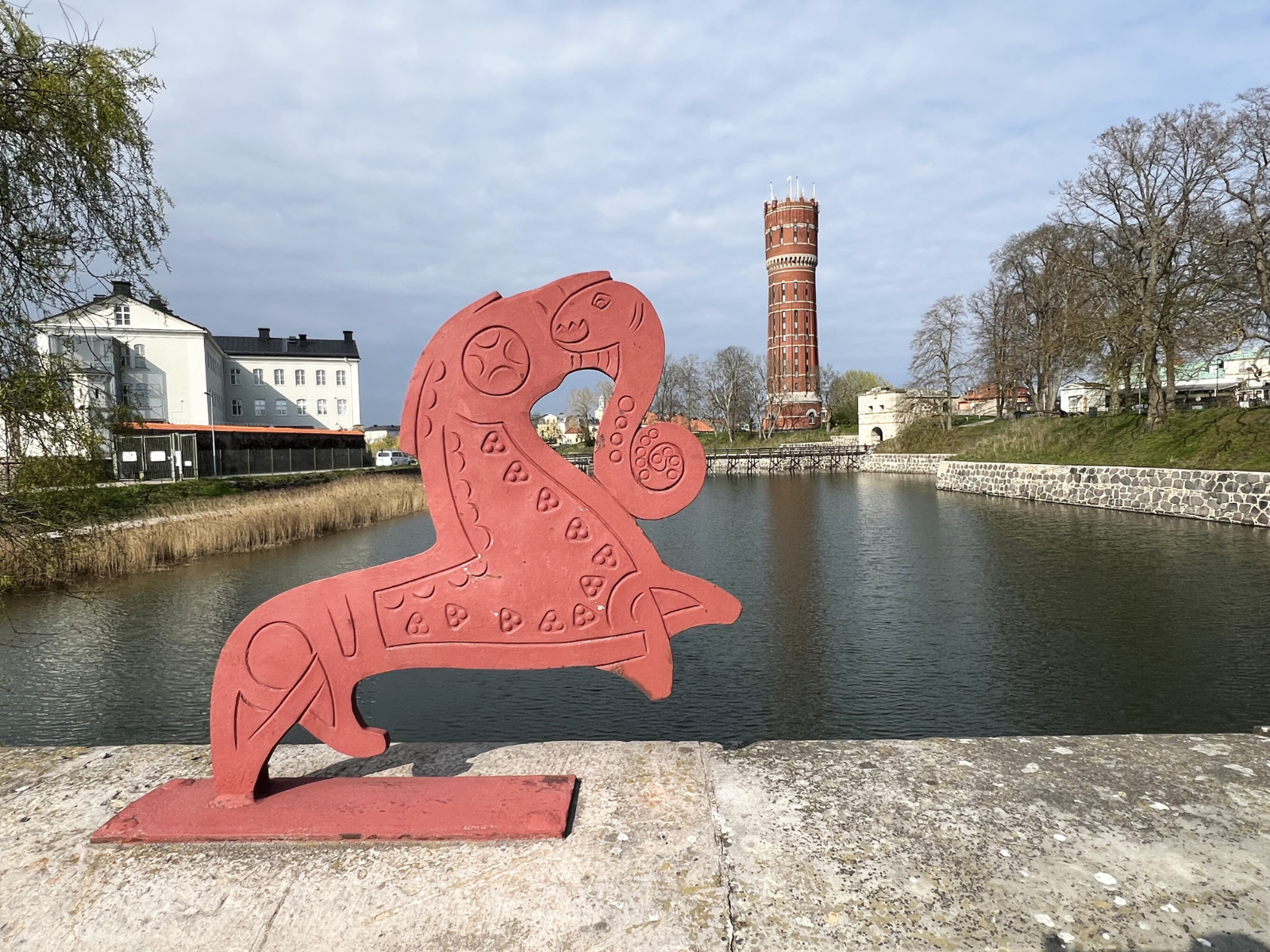
#5: Horse with snake in the mouth found in Hossmo-Ljungby. Now, a caveat applies to this one: it’s the centerpiece of the entire artwork and is also the only one mounted to the top of a concrete structure rather than to the side of a metal railing. As such, it is held in a somewhat loftier position than the eight other constituent pieces. But it is also the most mysterious. I couldn’t find any additional information about the original historic artifact anywhere online (or in my own personal collection of obscure Swedish history books), so I contacted the artist himself. Lars was kind enough to reply and send me a black-and-white photograph of the original artifact with hand-written labels on it. We thought that perhaps Kalmar läns museum might have some information about the artifact in its online database, but no such luck (and same with Historiska, where all the other artifacts represented here are housed). Now, being that this is a personal blog maintained for fun and feeble efforts at glory rather than a peer-reviewed journal or serious academic press, I did not pursue the matter further. But if anyone out there knows more about the original artifact, please let me know! In the meantime, we must rest contented that ancient Smålandic horses who swallow snakes are very enigmatic creatures indeed.
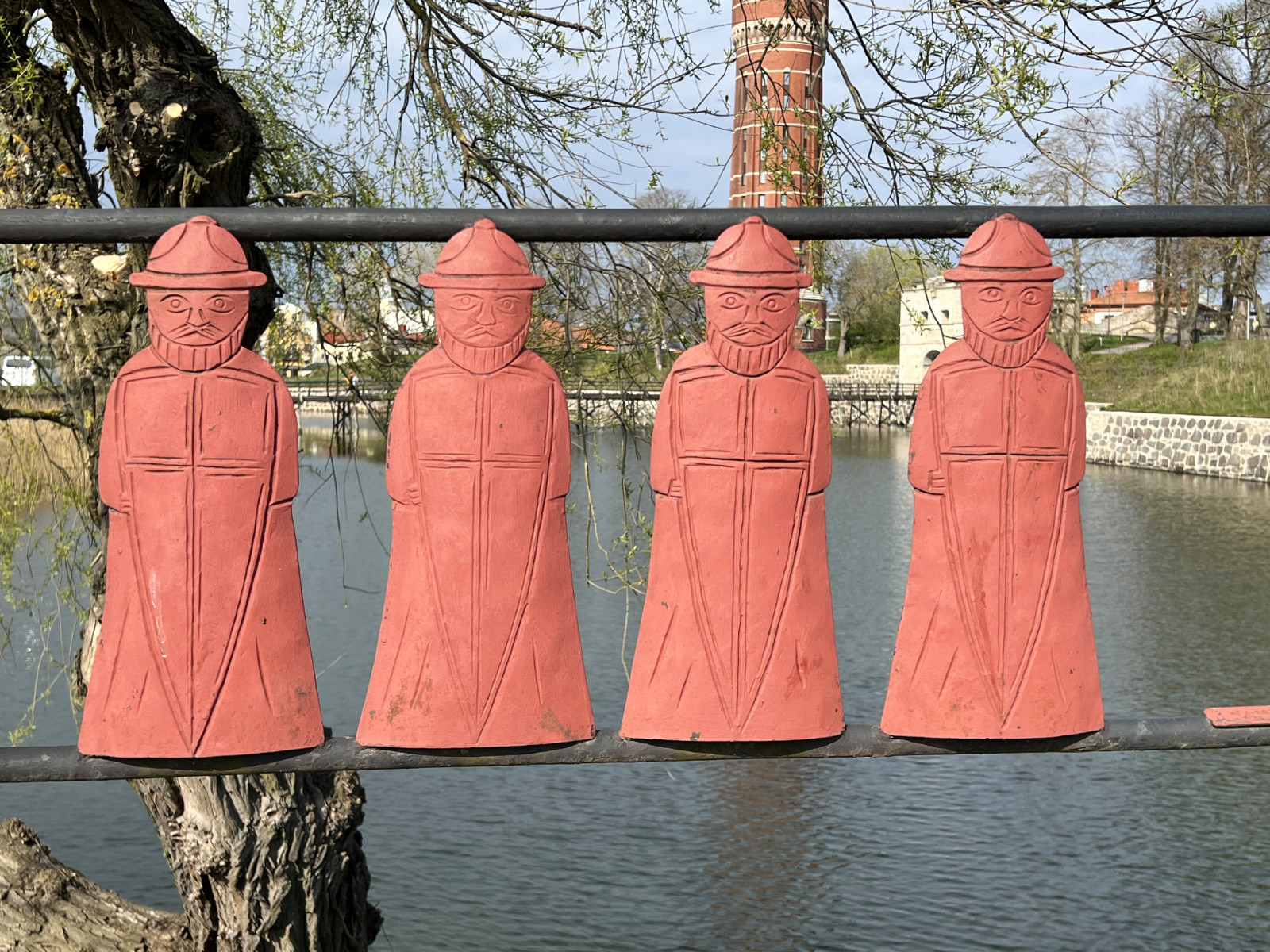
#6: Chess pieces from old town Kalmar (or Mörbylånga per SHM’s database) (43343_HST)
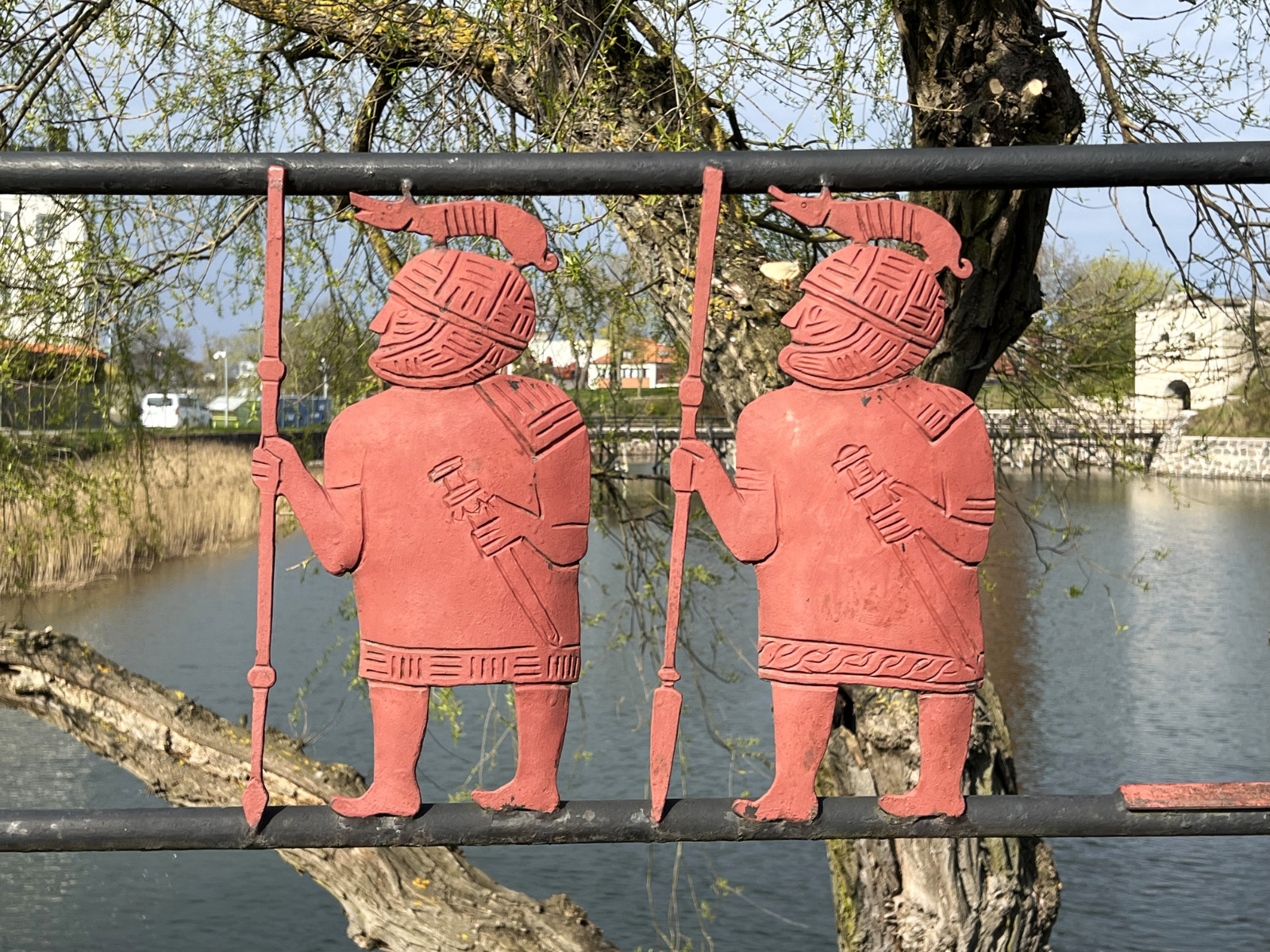
#7: Mould for bronze plates from Björnhovda in Torslunda 600s (108869_HST)
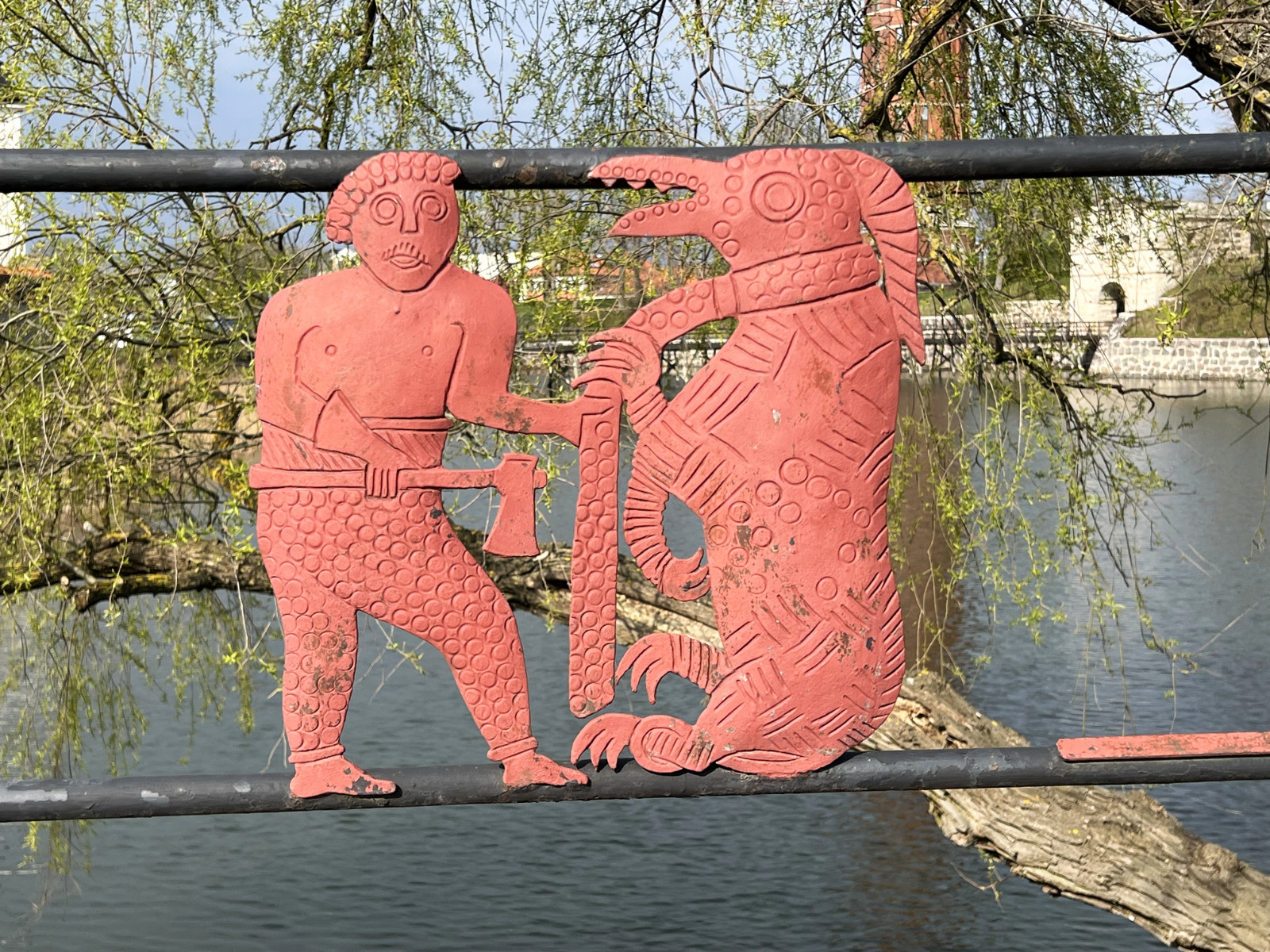
#8: Mould for bronze plates from Björnhovda in Torslunda 600s (618350_HST)
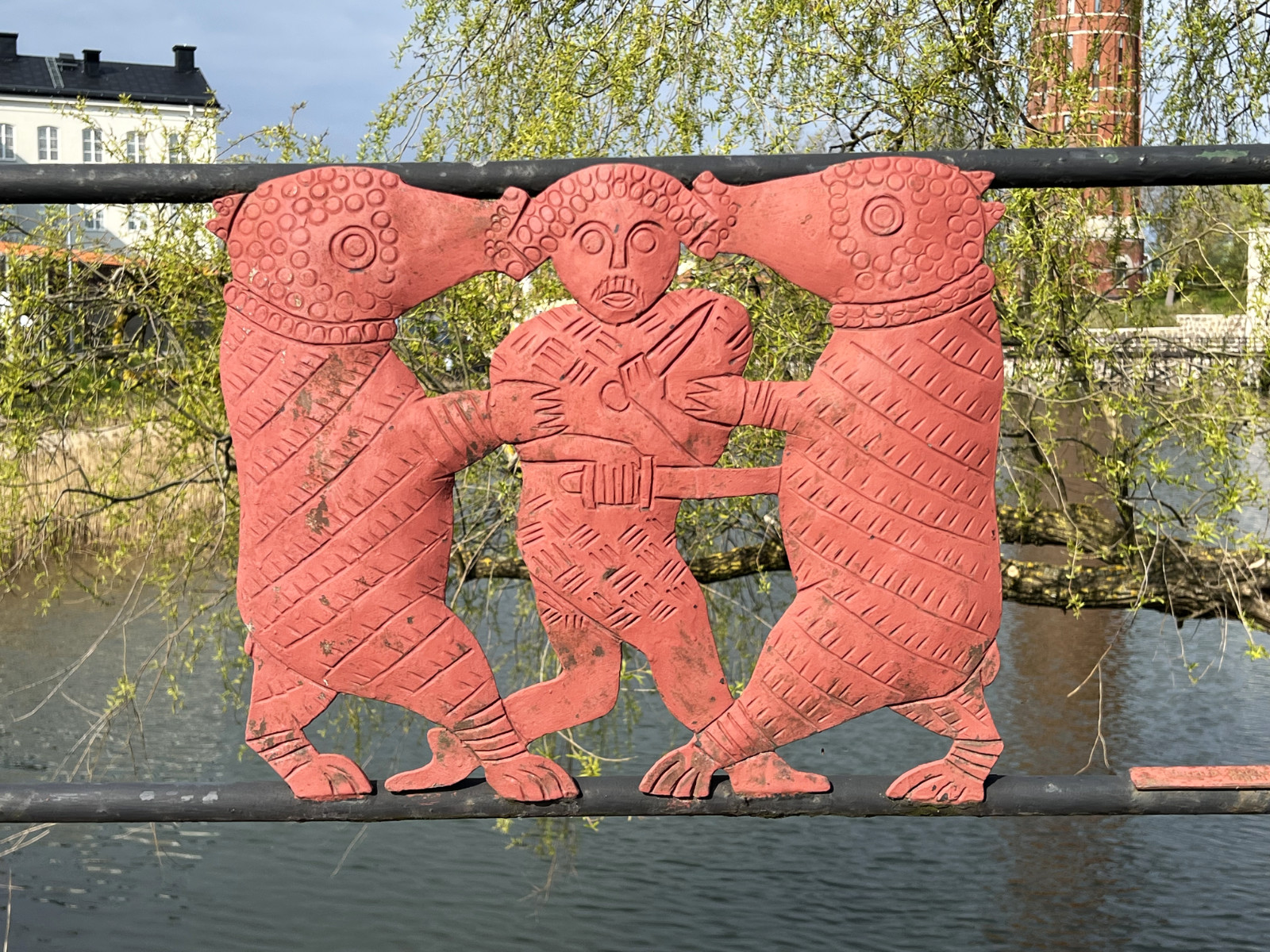
#9: Mould for bronze plates from Björnhovda in Torslunda 600s (618351_HST)
- Essentially meaning “Small Lands” in reference to its ancient collection of petty kingdoms that never really coalesced into a cohesive, larger, unified territory as surrounding regions did, Småland today is a large area in southeastern Sweden and is comprised of the counties of Kalmar, Jönköping, and Kronoberg. The island-land of Öland is part of Kalmar’s county. ↩︎
- For those of you familiar with Småland, you might have been thinking this blog post would be about Ölandsbron, because it is more famous and connects Småland to Öland. Nothing against Ölandsbron, but we’re here for artistic mementos to ancient Nordic culture, not slick 20th century works of civil engineering prowess. ↩︎
- Yes, nine. Coincidence? Unlikely. ↩︎
- Faluröd is the iconic red found most iconically on Swedish houses in the deep, dark woods. The color came about as a byproduct of the massive copper mine in Falun in Dalarna’s county. ↩︎
Subscribe to get updates from Scandinavian Aggression!
You know, if you feel like it or whatever. You'll receive a code for 25% off any combination of items at the Puffin Carcass Etsy Store, including signed copies of The Impudent Edda and The Scandinavian Aggressors. Other discounts are included in the newsletter that is sent out to subscribers, which only happens when new nonsense has been posted to the site. Your email is only used for the purpose of sending those updates. It's stored in the secure abyss of WordPress and not shared anywhere or anyhow else. Skål som fan!