
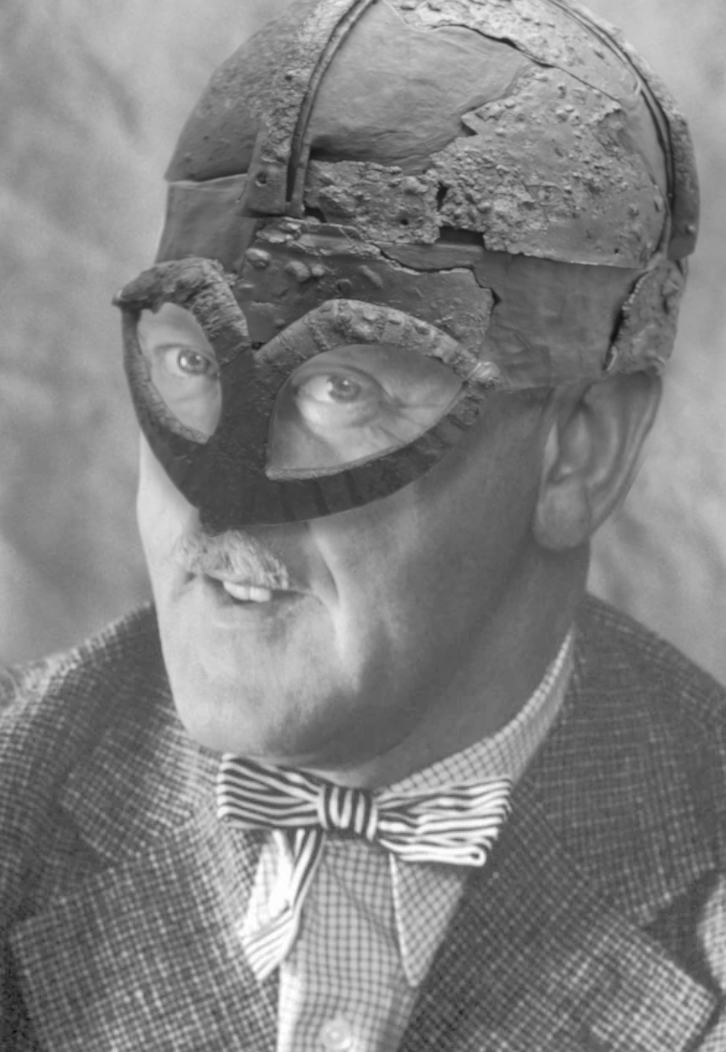
”Many a dim night have I gotten to my feet while others slept, brandished my weapons and bitten my shield rim in uncontrollable longing for the glory that is won by slaying men and ruling the world.”
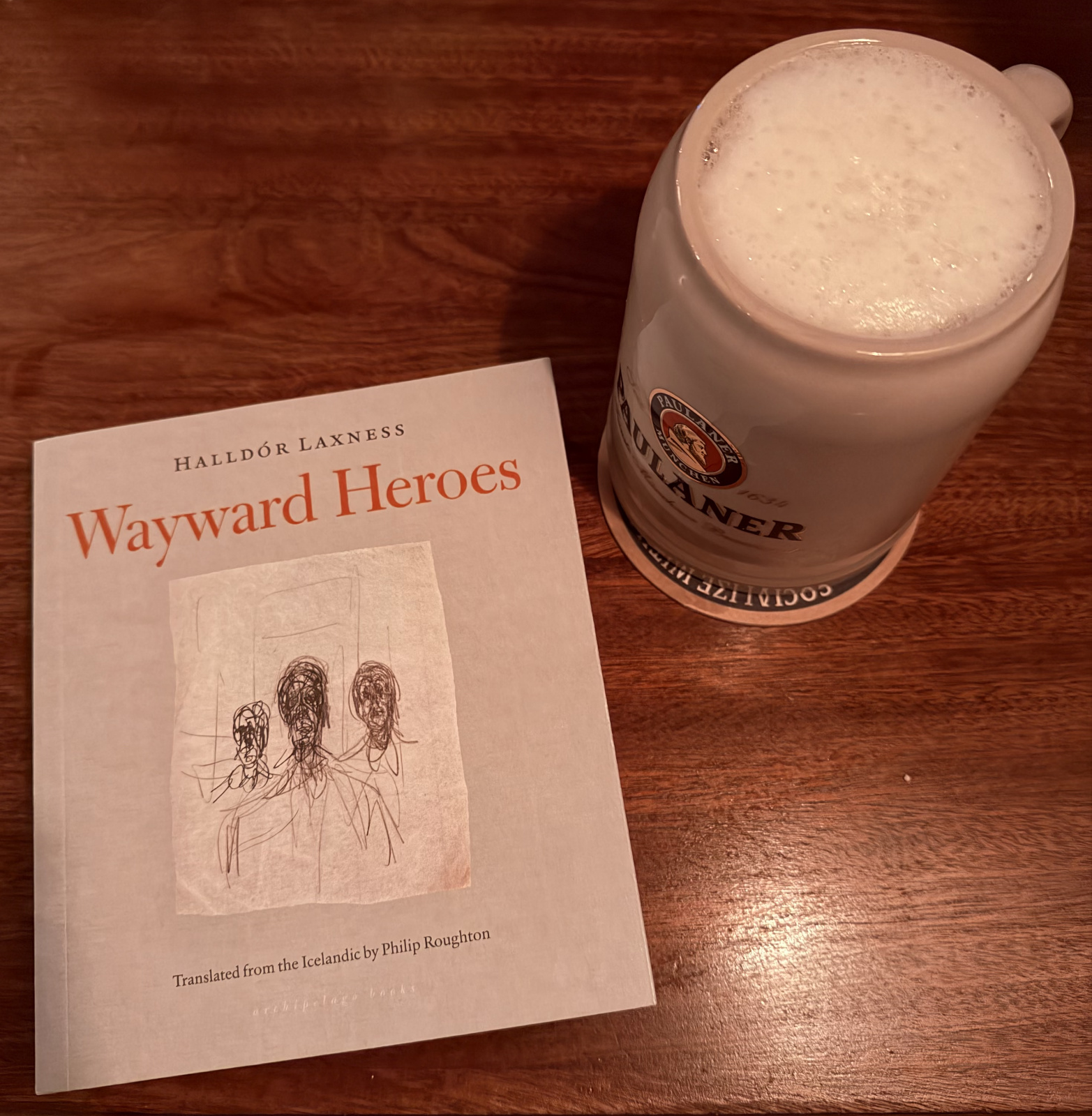
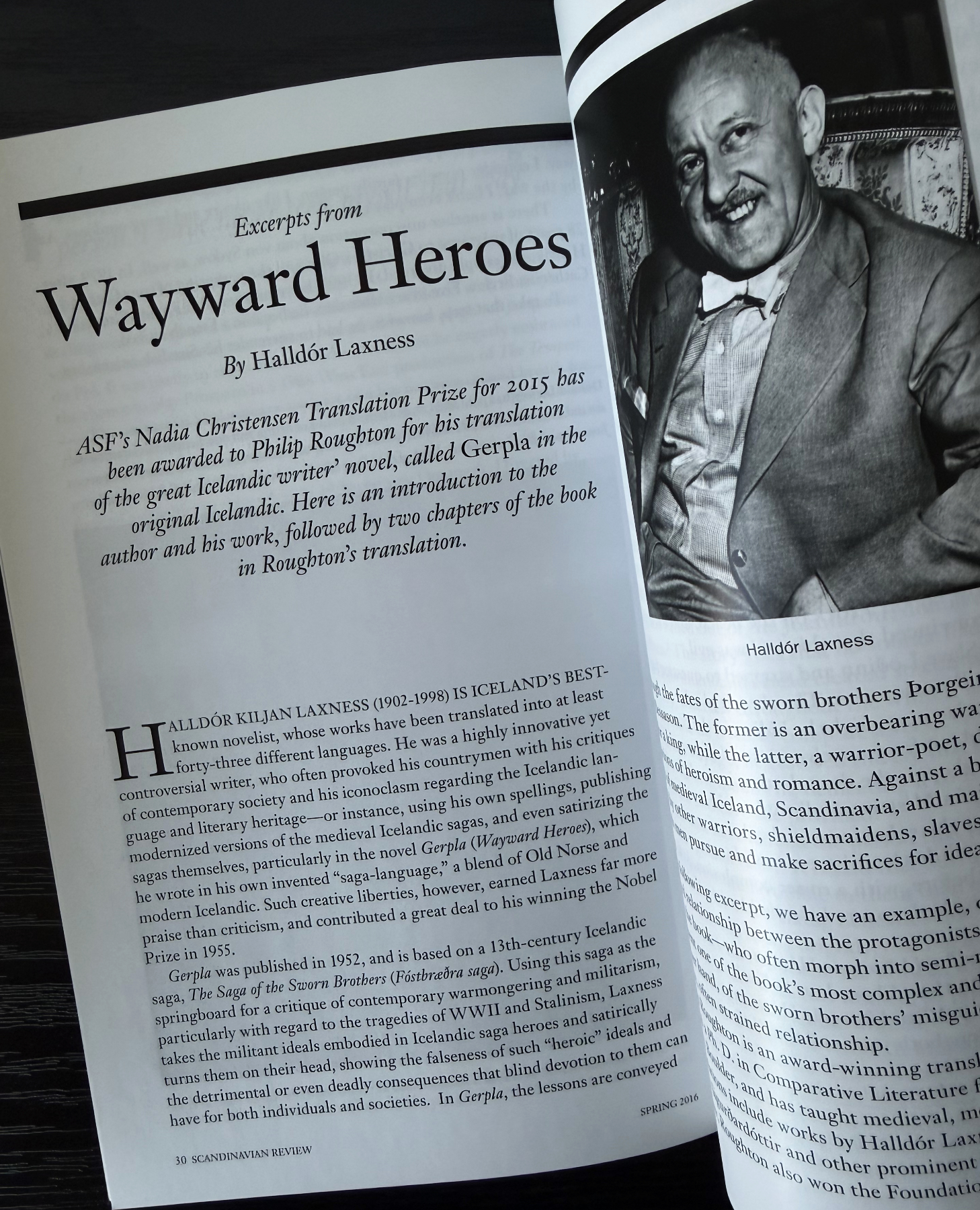
Thus wrote the great Icelandic Nobel laureate of words and wisdom, Halldór Laxness, in his 1952 satirical historic fiction novel, Gerpla. Gerpla has been translated twice to English from the original Icelandic, once in 1958 as The Happy Warriors by Katherine John (no longer in print), and again much later in 2016 as Wayward Heroes by Philip Roughton (who is also responsible for all the English turns of phrase shown here).
”Nothing but harm and misfortune result when killers and skalds come together.”
The book is basically a retelling of Fóstbrœðra saga (The Saga of the Sworn Brothers), which is one of the lesser known Icelandic sagas and hard to find (at least in English). But familiarity with it doesn’t really matter in terms of enjoying Laxness’ work. The man may be more famous for Sjálfstætt fólk (Independent People) and Brekkukotsannáll (The Fish Can Sing), but, boy oh boy, did he do a grand job with Gerpla (Wayward Heroes). The book just drips with sarcasm over the course of its 463 pages. It pokes fun rather relentlessly at the pointless posturing of fighting for fighting’s sake, which is something that the two main characters (Þorgeir and Þormóðr, the sworn brothers—and the spelling of their names utilizes the Icelandic in Roughton’s translation) idolize, though they would probably be more likely to describe it as glory for glory’s sake. Laxness wrote the book as the Cold War was heating up, and it was meant as a critique of the era’s escalating aggression, though the narrative remains solidly grounded in its Viking Age context and never makes such a bold connection openly. But in this sense, the book is also very apt for the 2020s, sadly.
”I hope that we will never commit such a howling offense as to sue for peace with others.”
At any rate, Wayward Heroes simply tells a damn good story, and while I will be the first to admit I can’t read a word of Icelandic (okay, I guess I can read a few words if we want to include such staples of the language as bjór, kjúklingur, and takk), I thoroughly appreciated Roughton’s translation and suspect it was faithful to its source in addition to just being well done in English. The American-Scandinavian Foundation even funded some of the work, and I’m a longtime fan of the ASF, so I’m generally always happy to support projects they have supported. Roughton’s translation was released in the U.S. by Archipelago Books but its rights are still being shopped around for other lands, too, apparently.
”It has always been the case that great warlords never sleep more soundly than when a crucial battle is being fought.”
But enough babbling. This post’s primary purpose is to highlight some of the book’s great wit and word-smithing. Below is a collection of excerpts that I thought encapsulated the best of Laxness’ wit. I hope you rare few who visit this site enjoy them and will consider giving Wayward Heroes a go. And if you’re interested in an attempt at an actual book review, you can check out the one I posted over on the Bastard Child of Bezos Book Site.
”In none do the Viking ideals of piracy and pugnacity wax stronger than in old widows in remote valleys.”
”At that time, most men in Iceland were short and bandy-legged, gaunt and swollen-jointed, knotted and twisted by gout, blue of complexion and shriveled.”
”In those days nearly everyone was obliged to labor for a living, apart from champions who dwelt on outlying skerries and ate seabirds for their sustenance…”
”Yet is is said to be a sign of love when a man lies to a woman – and a woman loves a man when she believes him though she knows he lies.”
”Men take wives to make poetry unnecessary.”
”Many a dim night have I gotten to my feet while others slept, brandished my weapons and bitten my shield rim in uncontrollable longing for the glory that is won by slaying men and ruling the world.”
”Men do not become skalds and heroes by dwelling in their present bliss.”
”Women are most inclined toward a man on the day that they bring about his downfall and death.”
”He frowned at other folk and sat hunched and dour in lively gatherings, smiling only when murder or other great deeds crossed his mind.”
”It was an old Norse custom, much practiced in Iceland by men engaged in combat, to be sure to strike the first blow. The man who managed to impale his enemy or slice off his head before he had his guard up was considered most doughty. At that time, people never slew each other for sport, but rather, for their own profit, and they judged a conflict by its outcome. Long afterwards, it became fashionable for French minstrels in their chansons to reserve highest praise for killings that were carried out with artistry and courtesy. That was in the age of chivalry – when Icelanders were pummeling each other with rocks.”
”The merchants were of the sort that did business with others if the occasion presented itself, but otherwise, in fine Norse style, plundered in places where no one seemed likely to defend their possessions.”
”Þorgeir Hávarsson said that he bemoaned only one thing in his heart: that he had not yet found a king who was so grim and mighty that he never spared the life of a woman or a child and sank merchants in bottomless bogs.”
”The English were not much convinced of the need for many of the taxes he imposed upon them, obliging him, like numerous other kings, to collect some through coercion and tyranny.”
”As they feasted, they declared Ælfheah a true son of the Devil, meaning to deprive valiant warriors of eighty hundreds of silver for the sake of his own arrogance. They pronounced it a damned disgrace for craven monks to cower in the bosom of that gallows-carrion Christ and fleece doughty men of their livelihoods.”
”For the fear that a land’s rulers have of foreign conquerors is slight compared to the fear of their own subjects.”
”When Æthelred hears how the townspeople of London are relentlessly burning and sinking the Norsemen’s ships, and boiling the Vikings in piss and carving them up with table knives, he feels utterly betrayed – to learn that now, in the space of one morning, the wisdom handed down by sage English kings of old, that the Norsemen are invincible, is to be proven false by a crazy rabble, weaponless and ignorant of warfare, after England’s army had fled to the woods or hidden itself in manger stalls.”
”The rabble thronged round, their tongues flapping with praise and eyes glistening with tears of joy to witness such an appalling gang of thieves and villains adorned with the cloak of light, ready to be anointed with holy water and chrism and to receive absolution for their evil deeds, such as stealing cows and setting fire to Europe for seven generations.”
”It goes ever for kings as for vicious dogs: they lie on their spines when their bellies are scratched.”
”There stands the town of Chartres, girded with walls and towers. In old Icelandic books, the place is called Hill-in-France.”
”Several voices said that it would be wiser to burn the king and the other folk inside the church, rather than wait for the wickedest of all fiends, the rabble, to rise up and ambush the besiegers in the town.”
”The Norsemen deemed it a paltry campaign if they failed to maim three dozen defenseless individuals for every fighting man they killed, and it has always been thought fitting that this ratio be maintained by bands of valiant warriors – those who have any respect for fame and heroism – when they make war on other lands.”
”They were gathered to celebrate the death of Odo of Chartres, and no one had the right to spoil the others’ merriment. Nor was any man obliged to toss infants on spear-points unless he wished it.”
”From now on nothing more was to be given to the flames – and there should be no more murders, rapes or other heroic deeds.”
”Moreover, the Vikings declare their willingness to have bishops accompany them, ready to deliver Christ’s verdict whenever necessary, such as when they might burn churches, as well as to offer them absolution if they burned them unjustly.”
”Scores of valiant fighters lost their lives there, ingloriously. Many more, however, took the course of action that has always served Vikings best in a pinch: not to wait for the worst. Each fled as fast as he could from his spoils and his share in the booty, and let darkness and night conceal him.”
”Þorgeir was fairly certain that he could expect less mercy from the spear side of this family than from the distaff side.”
”You take great risks, poor devil, journeying such long distances over the churning sea, or forcing your way through briers and vipers’ nests in distant lands, only to burn down the houses of poor foreigners you know nothing about, or string up farmers on their own land in southerly regions of the world, along with other distinguished men who have never before come before your eyes or harmed you in any way.”
”Many Englishmen came to parley with King Sweyn and pledge him their allegiance, stating that they preferred their king to be a foreign, heathen patricide and sworn enemy of Christians than a native, devout Christian king who carved bones in peacetime and vomited in wartime, and never commanded his troops against anyone but his own subjects.”
”He had no education, apart from the tall tales and hashed and hackneyed poems that sailors swapped to stave off tedium and steel themselves – all of them about battles and sea perils, deeds derring-do and feats of renown, as well as obscene anecdotes on the shenanigans of ogresses in the North, or vulgar verses about the gods.”
”He declared himself king following what was the prevailing custom in the North according to some scholars: namely, that the scoundrel who had the greatest stamina and best success in decimating the populace in a particular place should have that name.”
“It appeared that this farmer, who had passed his days ingloriously at home, was in possession of far greater wealth, both in money and valuables, than a Viking could gain through deeds of everlasting renown in distant lands.”
“History shows time and again that when a king sells his kingdom, its people are rarely as easily sold.”
“The scullions felt that the man was in an exceptional position for beheading.”
”’What are you searching for in this foul hole, you fool?’
’Glory,’ says the newcomer.
’I never heard of anyone gaining glory in Greenland,’ says the man. ’Whom do you plan to kill?’”
”’That woman loved me no less than you. Whereas you called on me to kill your lover, she went by night to her slave’s bed, enabling me to pull on my shoes and depart for the freedom that begets heroes and skalds.’”
”’A life void of exploits is foul indeed, yet fouler still is a death void of glory.’”
”When the Norsemen slew their first Inuit, these people were so utterly baffled by the newcomers’ bizarre, depraved behavior that they named the Norsemen after this characteristic of theirs, calling them ‘killlermen’ or ‘mankillers’ to distinguish them from men – genuine men – the Inuit.”
”As much as the Swedish kings have always been far mightier and greater rulers than the kings of Norway, there are fewer tales concerning them, since Icelandic books focused more on raising the Norwegian kings above their usual pettiness.”
”Those were bountiful years in Denmark, both on land and at sea, and the commoners’ welfare improved, as always happens when lords of the land remain distant, taking their wars with them.”
”Norwegians have always found it highly laughable how Icelanders trace their ancestry to kings.”
”The Norwegians feel quite strongly that they can do without any long, complicated poems croaked out ad infinitum by a beggarman from Iceland.”
”She said it was certainly a kingly feat to dispatch one’s own brothers from the world.”
”Yet as glad as Olaf was of this fighting force, the lords in the east were no less gratified, in this time of famine, that the king of the Swedes should have thieves and paupers and other wicked rabble rounded up on the mainland and isles and shipped off to be slaughtered west of the Baltic.”
”The accounts say that he carried in his scrip no treasure apart from an old, fermented cheese – one of those sorts produced in the North that stink most of all things known in Christendom and cause thieves, pilferers, and cutthroats to avoid any pilgrim who carries such an abomination.”
”Strange that Icelanders should now wish to have arsonists lording it over them, after having fled from Harald Tanglehair’s rule here in Norway.”
”A herring fisherman says: ’Great misfortune has befallen us Norwegians ever since we stopped sacrificing our rulers and started eating whale meat.’”
Subscribe to get updates from Scandinavian Aggression!
You know, if you feel like it or whatever. You'll receive a code for 25% off any combination of items at the Puffin Carcass Etsy Store, including signed copies of The Impudent Edda and The Scandinavian Aggressors. Other discounts are included in the newsletter that is sent out to subscribers, which only happens when new nonsense has been posted to the site or whenever there is a discount going on at the Dashery store. Your email is only used for the purpose of sending those updates. It's stored in the secure abyss of WordPress and not shared anywhere or anyhow else. Skål som fan!